

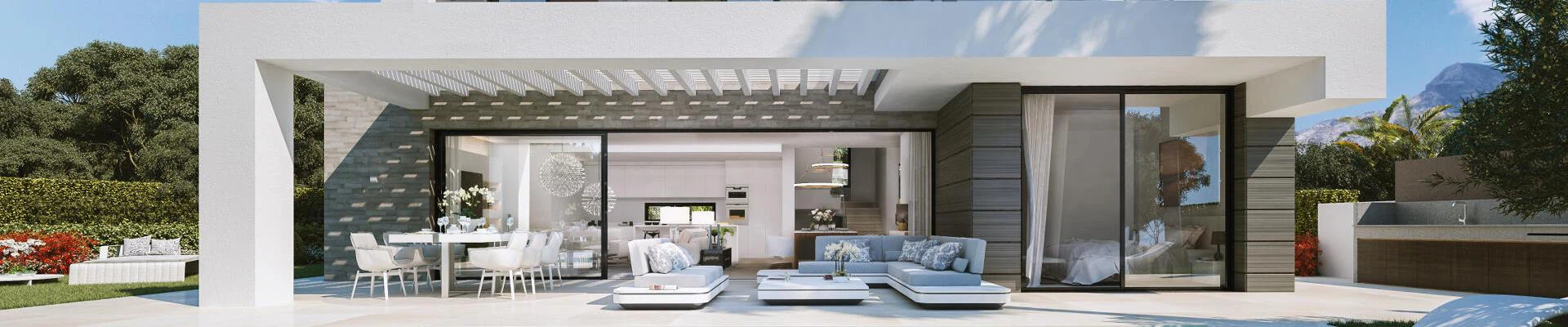
In coastal regions where seasonal storms are no longer treated as rare events but as recurring realities, the choice of exterior openings carries consequences far beyond aesthetics or ventilation. Sliding glass doors, in particular, occupy a vulnerable position within the building envelope. Their large glazed surfaces invite natural light and expansive views, yet in high-wind zones they also represent one of the most exposed elements of a structure. For developers and builders working in hurricane-prone areas, the conversation inevitably shifts from appearance and cost to structural performance and long-term resilience. It is within this context that hurricane impact sliding doors begin to stand apart from standard sliding door systems, not as a luxury upgrade, but as a fundamentally different response to environmental risk.
At first glance, both systems may appear similar. They share comparable frame profiles, operate along parallel tracks, and can be configured in multiple panels to create wide openings between interior and exterior spaces. In moderate climates, a standard sliding door may adequately serve residential or light commercial needs, providing weather sealing and basic structural stability under ordinary wind conditions. However, the similarities largely end when projects move into designated high-wind zones. In these regions, building codes are not shaped by average weather patterns but by extreme events-sustained winds, rapid pressure changes, and wind-borne debris traveling at high velocity. The engineering logic behind door systems must therefore account for forces that go well beyond routine performance expectations.
Standard sliding doors are typically designed around basic structural load assumptions. Their glass panels are often made of tempered or insulated glass units intended for thermal performance and general safety, but not necessarily for impact resistance. Frame profiles may be optimized for cost efficiency and ease of installation rather than maximum rigidity under cyclic pressure loading. In everyday conditions, these design decisions are practical and economical. Yet under hurricane-force winds, the stresses exerted on large glass panels can escalate dramatically. Wind pressure does not act uniformly; it fluctuates, reverses direction, and concentrates along edges and corners of buildings. When combined with debris impact, the structural demand on the door assembly increases exponentially.
The fundamental difference in hurricane sliding doors lies in how they are engineered to confront these extreme scenarios. Rather than focusing solely on static wind load, they are tested and designed for both impact resistance and cyclic pressure performance. Laminated impact glass, often composed of multiple layers bonded by interlayers such as PVB or SGP, is central to this approach. When struck by debris, the outer glass layer may crack, but the interlayer retains the fragments and preserves the overall integrity of the panel. This retained integrity is critical because the greatest structural danger often arises not from the initial crack, but from the sudden internal pressurization that follows if the envelope is breached. By maintaining a barrier even after impact, these systems help prevent catastrophic pressure imbalances inside the building.
Frame construction also reflects this shift in design philosophy. Reinforced aluminum profiles, thicker wall sections, and more robust corner assemblies are common features in impact-rated systems. The anchorage strategy is equally significant. In high-wind zones, the connection between the door frame and the surrounding structure becomes a structural element in its own right. Fastener spacing, embedment depth, and substrate compatibility are carefully calculated to ensure that loads are transferred safely into the building's structural frame. This level of integration is rarely emphasized in standard sliding door installations, where the assumption of moderate environmental stress allows for simpler detailing.
Beyond individual components, the distinction extends to the way performance is verified. Standard sliding doors may be evaluated against general wind load standards, but hurricane-rated systems undergo more demanding test protocols that simulate both debris impact and repeated pressure cycles. These tests are not symbolic; they replicate the dynamic forces experienced during actual storms. The door assembly must endure an initial impact, followed by thousands of pressure fluctuations that mimic sustained hurricane conditions. Only by passing both stages can a system demonstrate its suitability for designated high-wind areas. This rigorous validation process shapes every aspect of design, from glass thickness to hardware selection.
In practical terms, developers often confront the question of cost. Standard sliding doors typically carry a lower upfront price, and in regions without strict wind code requirements, they may represent a rational financial choice. However, in coastal markets where storm events are recurrent, the calculus shifts. The cost difference between a standard system and impact sliding doors must be weighed against potential repair expenses, insurance implications, and project liability exposure. A single envelope breach during a severe storm can lead to extensive interior damage, mold remediation, and prolonged occupancy disruption. When viewed through the lens of lifecycle performance rather than initial procurement cost, the more robust system often reveals a different economic profile.
Architectural intent also plays a role in this comparison. Modern coastal developments frequently emphasize transparency and fluid transitions between indoor and outdoor spaces. Large-format sliding glass doors are central to this aesthetic. Yet increasing panel size inherently increases wind load demand. In high-rise or waterfront projects, wind speeds intensify with elevation and exposure category. Under these circumstances, relying on standard systems may introduce design constraints, forcing reductions in panel dimensions or additional structural reinforcement elsewhere. Impact-rated systems, engineered for higher design pressures, provide greater flexibility in achieving expansive openings without compromising compliance.
Insurance considerations further complicate the decision-making process. In hurricane-prone states, insurers often evaluate the resilience of the building envelope when determining premiums. Certified impact-rated openings can contribute to favorable assessments, while the absence of such features may increase risk categorization. Although insurance structures vary by region, the underlying principle remains consistent: resilience is measurable, and envelope performance influences financial exposure. By integrating impact-rated sliding doors into high-risk projects, developers can demonstrate proactive risk mitigation rather than reactive repair planning.
It is also important to recognize that resilience extends beyond the immediate aftermath of a storm. Buildings are long-term assets, and repeated exposure to high winds can fatigue materials over time. Systems designed for cyclic pressure performance account for this repetitive stress, reducing the likelihood of gradual degradation. Standard doors, even if they survive a single severe event, may experience cumulative strain that affects seals, rollers, and frame alignment. In contrast, impact-rated assemblies are built with the expectation of enduring multiple storm cycles throughout their service life.

The regulatory landscape reinforces these distinctions. Many coastal jurisdictions have adopted increasingly stringent codes in response to historical storm damage. These regulations do not merely recommend impact-resistant openings; they often mandate them within specified wind-borne debris regions. Compliance is therefore not optional but integral to project approval. Attempting to substitute standard sliding systems in such zones can result in failed inspections, redesign requirements, and schedule delays. By aligning product selection with regulatory expectations from the outset, project teams avoid costly revisions and maintain construction momentum.
From a broader perspective, the debate between standard and impact-rated sliding doors reflects a shift in how risk is conceptualized within the construction industry. Climate variability and urban coastal density have elevated the consequences of envelope failure. What was once considered an upgrade is increasingly viewed as baseline protection. In this evolving environment, the differentiation between ordinary sliding systems and impact-resistant sliding doors becomes less about product category and more about structural responsibility. As high-wind zones expand and storm intensity trends upward, the standards that define acceptable performance continue to rise accordingly.
When comparing the two systems side by side, the conversation inevitably returns to purpose. A standard sliding door fulfills everyday functional requirements-access, daylight, and moderate weather resistance. An impact-rated sliding door, by contrast, is engineered with a singular focus on preserving structural integrity under extreme stress. This divergence in purpose shapes material selection, testing protocols, installation detail, and long-term durability expectations. For projects located in regions where wind events are not hypothetical but seasonal certainties, the distinction is not theoretical; it is embedded in every design calculation and construction decision that follows.
As projects progress from conceptual design into detailed engineering, the implications of this distinction become increasingly tangible. Structural engineers begin calculating design pressures based on building height, exposure category, and geographic wind speed maps. In coastal zones, negative pressures along rooflines and upper elevations can far exceed what many assume when looking at a door from ground level. The sliding door opening, often one of the largest uninterrupted voids in an exterior wall, must resist these forces without excessive deflection. Even slight frame deformation can compromise gasket compression, allowing water infiltration long before structural failure occurs. This is where the internal reinforcement and tested performance thresholds of high-impact sliding door systems demonstrate their value, not merely in resisting breakage but in maintaining operational integrity under stress.
Water intrusion is frequently underestimated in discussions focused on glass strength alone. During hurricane events, wind-driven rain can be forced horizontally or even upward against façade elements. Standard sliding doors may rely on drainage tracks and weather stripping sufficient for ordinary storms, yet these systems can become overwhelmed under extreme pressure differentials. Impact-rated assemblies, designed in tandem with higher wind resistance, often incorporate more robust interlocks, deeper sill profiles, and enhanced sealing strategies. The objective is not only to prevent shattering but to reduce the probability of progressive interior damage caused by sustained wind-driven rain. In multi-unit residential buildings or hospitality projects, such protection can mean the difference between localized repair and widespread interior restoration.
Hardware performance further distinguishes the two systems. Rollers, tracks, and locking mechanisms must function reliably even when frames experience fluctuating pressure loads. In standard doors, hardware is typically optimized for smooth operation and cost efficiency under normal conditions. However, repeated high-pressure cycles can strain locking points and distort alignment. Impact-rated sliding doors are engineered with reinforced locking systems and multi-point engagement mechanisms designed to secure the panel tightly within the frame during extreme weather. This integrated resistance contributes to overall envelope stability, ensuring that the door does not become a structural weak point during a storm event.
By contrast, systems engineered for hurricane resistance often incorporate corrosion-resistant finishes, stainless steel hardware options, and enhanced protective coatings-design considerations that align closely with the performance verification framework outlined in Understanding Miami-Dade NOA Impact Windows Requirements For Florida Construction Projects. These material choices reflect an understanding that resilience is cumulative; durability under storm conditions also supports performance in harsh marine climates.
It is also worth considering how occupant perception intersects with technical performance. In storm-prone communities, residents are acutely aware of seasonal risk. The presence of visibly robust glazing and reinforced framing can influence buyer confidence and perceived property value. While aesthetics remain important, the knowledge that a building incorporates hurricane impact sliding doors provides reassurance that safety considerations have been prioritized. This intangible value can strengthen market positioning, particularly in competitive coastal real estate markets where resilience has become a differentiating factor.
Energy performance sometimes enters the conversation as well. Though impact resistance and thermal efficiency are distinct performance metrics, modern impact-rated systems frequently integrate insulated glass units with low-emissivity coatings and thermal breaks. This combination allows projects to pursue both structural compliance and energy code alignment without treating them as competing objectives. In contrast, upgrading a standard sliding door for improved thermal performance does not inherently enhance its resistance to debris impact or cyclic pressure. The integration of multiple performance attributes within a single system can streamline specification decisions and reduce the need for separate mitigation measures.
From a construction sequencing standpoint, specifying impact-rated systems early can also reduce coordination complexity. When high-wind requirements are addressed at the design stage, structural framing details, rough opening dimensions, and anchorage substrates can be aligned with tested installation conditions. Attempting to substitute standard doors late in the process, particularly in jurisdictions with strict wind-borne debris regulations, often triggers redesign of attachment details or even structural adjustments. These changes ripple across trades, affecting scheduling and potentially delaying occupancy. Early alignment between performance requirements and product selection supports smoother project delivery.
Insurance carriers and lenders increasingly analyze coastal developments through a resilience framework. Building envelope components that demonstrate verified performance under hurricane conditions contribute to broader risk assessments. In some cases, the incorporation of impact-rated openings may influence underwriting decisions or premium calculations. While financial structures vary across regions, the broader pattern is consistent: measurable resilience carries economic implications. When evaluating the comparative value of standard sliding systems and impact sliding doors, this financial dimension cannot be ignored.
The distinction between the two systems also extends to post-storm recovery scenarios. After a major weather event, buildings with compromised envelopes often face extended downtime while temporary boarding and replacement installations are arranged. Impact-rated assemblies, even if cracked, are designed to remain intact and continue shielding interiors from intrusion. This retained barrier can dramatically shorten recovery timelines, allowing repairs to focus on superficial glazing replacement rather than comprehensive structural remediation. For commercial properties, reduced downtime translates directly into preserved revenue streams and minimized disruption to occupants.
As climate models project increasing storm intensity in certain regions, municipalities continue refining building codes to address evolving risk profiles. What was once considered a premium specification in select coastal counties is gradually becoming a baseline requirement across broader geographic areas. Developers operating in multiple markets must anticipate these regulatory trajectories rather than react to them. By standardizing the use of impact-rated sliding systems in high-wind contexts, firms can maintain consistency across projects and reduce the learning curve associated with differing local requirements.
Ultimately, the comparison between standard sliding doors and hurricane sliding doors in high-wind zones is not simply a matter of product upgrade versus budget alternative. It reflects a broader shift in how the construction industry interprets environmental exposure. In moderate climates, standard systems may fulfill functional expectations with efficiency and affordability. In hurricane-prone regions, however, the performance threshold is fundamentally different. The building envelope is expected to act as a defensive system, preserving internal pressure balance and limiting cascading structural damage during extreme events.
When decision-makers examine this comparison through the lens of structural responsibility, lifecycle economics, regulatory compliance, and occupant safety, the rationale becomes clearer. Impact-rated systems are engineered not only to survive a single test but to withstand the unpredictable dynamics of real storms. Their design integrates reinforced framing, laminated glass technology, verified anchorage strategies, and comprehensive testing protocols into a cohesive response to high-wind exposure. Standard sliding doors, while suitable in less demanding environments, are not conceived with the same level of defensive intent.
In high-wind zones where seasonal hurricanes are an expected reality rather than an anomaly, the envelope cannot rely on assumptions of moderate exposure. Every large glazed opening represents both architectural opportunity and structural obligation. Choosing systems engineered for extreme conditions signals a recognition that resilience is not incidental; it is designed, tested, and built into the project from the outset. As coastal development continues to expand and climate patterns evolve, the integration of impact-rated sliding doors stands as a pragmatic acknowledgment that durability and safety are inseparable from long-term value.
In many projects, the most consequential decisions are not the ones that draw immediate attention during design presentations, but the ones that quietly determine how a building performs years later under stress. Sliding glass doors are often selected based on aesthetics, sightlines, and how seamlessly they connect interior living spaces to exterior views. In high-wind regions, however, that visual transparency must be supported by structural resilience. The comparison between conventional systems and storm-resistant sliding doors ultimately becomes a discussion about how much uncertainty a project team is willing to accept when confronted with the realities of extreme weather.
One of the less visible yet critical differences lies in how these systems respond to cyclic loading. Hurricanes do not apply pressure in a single, steady direction. Wind forces fluctuate rapidly, shifting between positive and negative pressures as gusts wrap around building corners and roof edges. This repeated loading and unloading can fatigue components over time. Standard sliding doors are rarely engineered or tested for extended cyclic pressure sequences that simulate hurricane conditions. By contrast, impact-rated assemblies undergo rigorous protocols designed to replicate debris impact followed by sustained and fluctuating wind loads. The objective is not merely to demonstrate survival in a laboratory setting, but to verify that the system retains structural and glazing integrity even after initial impact damage.
Frame rigidity plays a significant role in this performance. In tall residential towers or elevated coastal homes, differential movement between structural slabs and façade elements can occur during high wind events. A more robust frame profile, often present in hurricane-rated systems, helps distribute stresses more evenly across anchorage points. This reduces the likelihood of localized failure at fasteners or corner joints. Standard sliding doors, optimized for lighter loads, may not incorporate the same level of reinforcement, increasing the potential for distortion under extreme conditions. Even small deformations can compromise weather seals, which in turn exposes interiors to moisture and pressure imbalances.

Another aspect often overlooked is how building envelope failures can cascade. When a large opening such as a sliding door fails under hurricane conditions, internal air pressure can rise dramatically. This internal pressurization acts in opposition to external wind forces, placing additional stress on roof assemblies and other wall sections. In severe cases, this chain reaction contributes to partial roof uplift or structural compromise. By maintaining envelope continuity, hurricane-rated sliding doors help preserve pressure equilibrium within the building. This containment is not simply about protecting a single opening; it is about preventing a localized weakness from amplifying into systemic damage.
Acoustic performance can also intersect with impact-rated design in subtle ways. Laminated glass, commonly used in hurricane-rated assemblies, includes an interlayer that not only holds shards together after impact but also dampens sound transmission. In coastal urban environments where wind noise and ambient exterior sounds are prevalent, this added benefit can enhance occupant comfort. Standard sliding doors with monolithic or basic insulated glass configurations may not achieve the same acoustic moderation. While sound control is not the primary reason for selecting impact-rated systems, it represents an example of how structural resilience can align with experiential improvements.
Maintenance considerations further reinforce the distinction between these systems. Coastal climates introduce salt spray, humidity, and intense UV exposure, all of which accelerate material degradation. Impact-rated doors are frequently specified with finishes and hardware components selected for corrosion resistance. Stainless steel rollers, reinforced tracks, and protective coatings extend operational longevity in aggressive environments. Standard sliding doors may perform adequately inland, yet in high-salinity coastal air they can exhibit premature wear, particularly at moving components. Over time, the cost and inconvenience of repeated repairs can outweigh initial savings achieved during procurement.
In practice, the decision-making process rarely unfolds in isolation. Architects, structural engineers, façade consultants, and contractors each contribute perspectives shaped by their respective responsibilities. An architect may prioritize slender profiles and unobstructed views, while a structural engineer focuses on anchorage capacity and design pressure ratings. Contractors consider installation tolerances and sequencing constraints. When impact-resistant sliding doors are introduced into this dialogue, the conversation tends to become more integrated. The system is evaluated not only as a design feature but as a structural component requiring coordinated detailing from shop drawings to field installation.
The regulatory landscape continues to evolve as well. Municipalities in hurricane-prone states frequently update wind maps, exposure classifications, and debris region boundaries. What may have been optional in previous code cycles can become mandatory as new data informs risk assessment. Projects that proactively adopt impact-rated systems position themselves more securely within this shifting framework. Rather than reacting to future code changes with retrofits or design revisions, they incorporate resilience as a foundational assumption. Standard sliding doors, when installed in marginal wind zones without thorough performance verification, risk falling short of emerging requirements.
Market expectations have also shifted in recent years. Buyers and tenants increasingly inquire about storm readiness and building resilience, particularly in coastal regions with a history of major weather events. Marketing materials that highlight hurricane-rated glazing and reinforced sliding systems resonate differently in communities familiar with evacuation orders and property damage. The presence of impact sliding doors signals a level of preparedness that extends beyond aesthetics. It communicates that the developer has accounted for environmental realities rather than relying solely on minimum compliance.
It is important to acknowledge that not every project requires the same level of performance. Inland developments in lower wind speed regions may not justify the additional investment associated with impact-rated assemblies. Building design is inherently contextual. However, in designated high-wind zones, where storm events are statistically predictable rather than hypothetical, the calculus changes. The potential consequences of failure-structural damage, water intrusion, displacement of occupants, extended downtime-carry weight that extends far beyond initial product cost comparisons.
As the construction industry continues to confront the challenges posed by climate variability, resilience is becoming less of a specialized consideration and more of a baseline expectation. Large glazed openings will remain central to contemporary architectural expression, especially in coastal environments that emphasize light and views. The technical task is ensuring that these openings do not undermine structural stability during extreme weather. In this context, the comparison between standard sliding doors and hurricane sliding doors reflects a broader professional responsibility: aligning design ambition with environmental reality.
When evaluated comprehensively-through structural performance, lifecycle durability, regulatory alignment, financial risk mitigation, and occupant confidence-the distinction becomes less about optional upgrades and more about strategic foresight. High-wind zones demand systems conceived with defensive performance in mind. Hurricane impact sliding doors embody that intent, integrating reinforced framing, laminated glazing, and tested anchorage into a cohesive response to severe weather exposure. Standard sliding doors, while effective in moderate climates, do not operate within the same performance envelope.
The decision ultimately shapes how a building responds on the day conditions exceed ordinary expectations. In that moment, the invisible engineering embedded within the door assembly determines whether it functions as a resilient barrier or a vulnerable aperture. For projects situated where hurricanes are part of the seasonal landscape, that distinction carries enduring implications.


