Coastal Project Developers Are Moving From Installation Thinking to Lifecycle Window Management
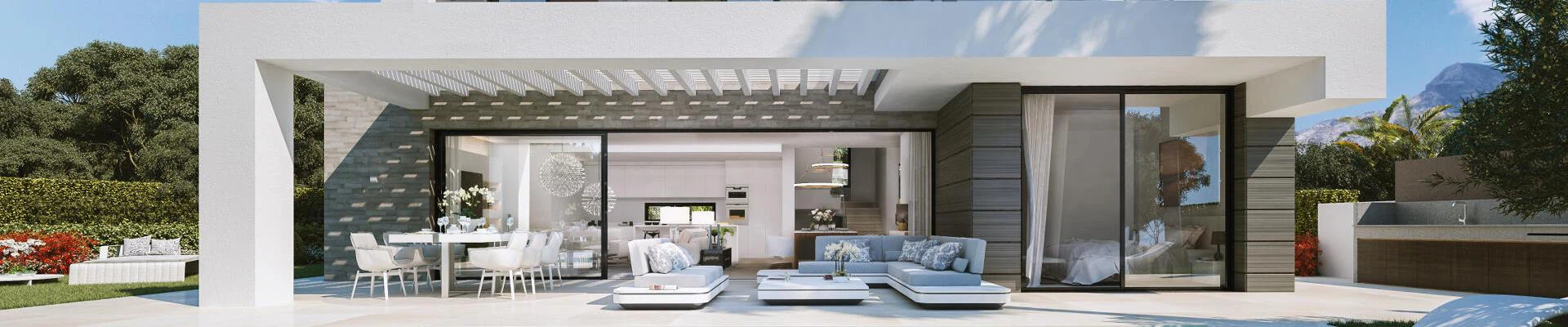
In the context of building development in coastal cities, the role of window systems is undergoing a subtle but crucial shift. Previously, impact window inspection was largely understood as an acceptance or routine check, typically occurring after installation or only revisited after obvious problems emerged. However, in a growing number of multi-unit projects and coastal developments, this "post-inspection" logic is becoming increasingly ineffective, which also highlights how modern systems are increasingly focused on risk prevention and lifecycle performance in coastal window strategies.
For developers, architects, and general contractors, a growing concern is that even with high-performance impact window systems, performance degradation is inevitable over long-term operation. This is especially true in coastal environments characterized by high humidity, salt exposure, and frequent strong wind loads, where window systems do not consistently maintain their initial design values.
Many projects begin to exhibit minor but cumulative problems within 5 to 8 years of delivery, such as sealant aging, increased hardware resistance, micro-leakage at glass edges, and even early signs of frame deformation in some high-rise buildings. While these problems may not seem serious individually, they collectively constitute a more insidious risk: an overall decline in the performance of the building envelope.
In this context, impact window assessment is no longer just a question of "whether it is bad or not", but has gradually evolved into an engineering judgment process of "whether the performance still meets the design expectations".
Why Traditional Inspection Models Fail in Coastal Building Envelopes
Traditional window system maintenance logic is often based on a relatively simple assumption: no intervention is needed unless there is obvious damage. This logic may hold true in typical inland residential projects, but it becomes overly idealistic in coastal commercial buildings or high-rise residential developments.
The impact of the coastal environment on impact windows is continuous and cumulative, not sudden. For example, salt spray corrosion of aluminum frames typically occurs slowly, almost invisible in its early stages, but once pitting occurs, it significantly affects structural stability. Similarly, long-term ultraviolet radiation degrades sealant performance, gradually reducing airtightness, a change that is not easily detected in short-term inspections.
Therefore, some more experienced developers are redefining the meaning of inspection, moving beyond simply focusing on "whether there is damage" to considering:
- window performance drift over time
- sealing integrity under cyclic wind load
- hardware fatigue under repeated operation
- thermal performance degradation in real conditions
These dimensions have led impact window evaluation to gradually shift from "maintenance actions" to "data-driven performance monitoring."
In some more advanced projects, architects even incorporate maintenance planning during the design phase, integrating inspection frequency, replacement cycle, and digital monitoring integration into the overall building lifecycle strategy. At the heart of this change is an upgrade in how risk is perceived: from reactive maintenance to proactive prediction.
Digital Maintenance Is Becoming a Standard for High-Performance Window Systems
With the evolution of building technology, window systems are no longer merely passive building envelopes, but are gradually becoming "performance units" that can be monitored, recorded, and analyzed. In this process, digital maintenance strategies are beginning to enter practical engineering applications.
For coastal projects, the significance of digitalization is not just "easier management," but also provides a new approach to risk control. For example, by regularly collecting usage data on impact windows (such as opening and closing frequency, changes in sealing pressure, and changes in glass stress), facility managers can intervene before problems develop into obvious failures.
In some large commercial developments, this approach is beginning to be integrated into building management systems (BMS). The status of window systems is incorporated into the overall energy performance monitoring system, forming a holistic feedback network for building operation together with HVAC systems and exterior wall systems.
The direct impact of this change is that window performance inspection is no longer an isolated event, but a continuous data flow process. For developers, this means that project delivery is no longer the end point, but the beginning of long-term operational responsibility management.
At the same time, this digital maintenance approach is also changing the logic of procurement decisions. More and more general contractors, when selecting impact windows, are no longer solely focused on initial certifications (such as NFRC or Miami-Dade standards), but are beginning to inquire about:
- Does it support long-term performance tracing?
- Does it have a standardized inspection protocol?
- Is it compatible with building lifecycle management?
- Is it easy to integrate with future maintenance?
The emergence of these problems essentially indicates that a trend is forming: Windows systems are shifting from "material procurement" to "lifecycle assets".
From Reactive Repairs to Predictive Maintenance Frameworks in Coastal Window Systems
In many coastal developments, window system maintenance has long followed an "event-driven" model: problems are addressed only when they occur, such as leaks, seal failures, or hardware damage. While this approach might maintain basic efficiency in small-scale residential projects, its limitations are rapidly amplified in multi-unit residential buildings or large commercial projects.
For developers and facility managers, a growing concern is that factors affecting window system performance don't appear suddenly as "failures," but rather accumulate slowly and continuously. This is why the meaning of impact window assessment is changing; it's no longer just about checking for damage, but is increasingly becoming part of predictive analytics.
In more mature engineering practices, maintenance logic has shifted from "repair-based maintenance" to a "predictive maintenance framework." The core of this shift is treating the window system as a long-term performance asset, rather than a one-time installation product.
Environmental Stress Accumulation and Hidden Performance Degradation
In coastal environments, the stress on impact windows is not from a single source, but rather the result of multiple environmental factors. Salt spray, humidity fluctuations, strong wind circulation, and long-term UV exposure collectively constitute a persistent "low-intensity, high-frequency loss system."
For architects and engineers, the challenge of this loss lies in its invisibility. For example, in the early stages of corrosion, aluminum frames may only show microscopic changes in the oxide layer, but after several years, these changes can affect the overall structural rigidity. Similarly, the interlayer of laminated glass may experience slight performance degradation under long-term UV exposure, but this is almost imperceptible visually.
More importantly, this performance degradation often does not affect the building's immediate usability, making it easily overlooked. These cumulative problems only become apparent under extreme storms or high-pressure weather conditions.
Therefore, in modern coastal building management, impact glazing inspection has gradually shifted from "discovering problems" to "identifying trends." Engineering teams are beginning to focus on:
- sealing system degradation rate
- frame corrosion progression curve
- operational resistance changes
- thermal insulation performance drift
The introduction of these indicators has transformed maintenance work from a simple repair activity into a data-driven engineering management system.
Digital Monitoring as a Bridge Between Design Intent and Real Performance
In traditional building design, performance assumptions made during the design phase often deviate from actual operation. This is especially true for impact window systems, where design parameters are typically based on standard test conditions (such as wind load simulation and water penetration tests), but real-world environments are far more complex.
Therefore, some developers are introducing digital maintenance systems, incorporating window systems into building lifecycle management models. The core of this approach is not "real-time monitoring of every detail," but rather establishing a traceable performance change curve.
For example, by regularly recording impact window inspection data, a window performance baseline can be gradually established and compared with subsequent operational data. Once a deviation from the baseline is observed, maintenance intervention can be initiated proactively, rather than waiting for failure to occur.
In some high-end commercial buildings, this digital maintenance approach has been integrated with building management systems (BMS). Window system status is correlated with energy consumption, indoor temperature fluctuations, and HVAC load changes, resulting in a more complete building performance profile, especially in projects requiring
impact-resistant window systems designed for coastal environments.
For general contractors, this change signifies a crucial shift: after project delivery, window systems are no longer "static products" but enter a continuous optimization cycle.
Maintenance Strategy as a Design Extension, Not an Afterthought
A notable trend in a growing number of coastal projects is that maintenance strategy is increasingly moving forward to the design phase.
In the past, maintenance was typically considered an operational issue; now, architects and engineers are beginning to consider the following factors when designing impact window systems:
- inspection accessibility
- replacement cycle planning
- modular frame design compatibility
- digital monitoring integration capability
This shift in design philosophy essentially transforms maintenance from a "cost center" to a "design extension."
In real-world projects, this concept is often reflected in system selection. For example, some high-performance aluminum impact window systems reserve standardized inspection interfaces, allowing for more efficient impact window evaluation without damaging the building structure or affecting normal use.
For developers, the value of this design strategy lies in reducing long-term operational risks; for building users, it means more stable indoor environmental control and more predictable maintenance costs.
Lifecycle-Oriented Window Management Is Becoming a Standard in Coastal Developments
As coastal projects enter their long-term operational phase, an increasingly clear trend is emerging: the value of impact windows is no longer determined solely by initial performance, but by their stability throughout their entire lifecycle.
For developers, architects, and general contractors, the evaluation of window systems is shifting from "whether they meet standards" to "how long they can maintain those standards in a real-world environment." This change is causing traditional acceptance logic to gradually give way to continuous performance management logic.
In this process, impact window assessment is no longer just a component of the maintenance system, but is evolving into a critical data node connecting design, construction, and operation. It not only records the current state but, more importantly, provides a basis for judging long-term trends.
This trend is already very evident in some multi-unit coastal developments. After project delivery, window systems are integrated into the facility management system, forming a comprehensive operational network along with building energy systems, exterior wall systems, and structural safety monitoring. Maintenance teams no longer rely on single inspection results but instead use periodic inspection data to determine performance change trajectories.
Digital Maintenance Systems Are Closing the Gap Between Design Assumptions and Real Performance
In traditional building delivery logic, performance assumptions during the design phase are often based on standardized testing conditions, such as wind load rating, water penetration resistance, and thermal performance benchmarks. However, in real-world coastal environments, these conditions rarely persist in a stable state over long periods.
Therefore, the introduction of digital maintenance strategies essentially bridges the gap between "design performance" and "operational performance."
By incorporating impact window systems into a digital monitoring system, facility managers can continuously obtain data on the status of window systems, such as:
- sealing performance trend
- frame stress accumulation
- hardware operation resistance
- thermal insulation efficiency fluctuation
While these data may have limited significance in a single observation, they are crucial for long-term trend analysis. They help project teams intervene before performance degradation reaches a critical point, thus preventing structural problems.
For commercial buildings and high-rise residential projects, this predictive maintenance approach is becoming the new standard, no longer just an add-on option for high-end projects.
From Installation to Lifecycle Asset Thinking in Window System Strategy
As the construction industry increasingly focuses on sustainability and long-term operating costs, impact windows are gradually transforming from "building components" into "lifecycle assets."
This shift has a particularly significant impact on developers. Previously, window system procurement decisions primarily revolved around initial cost, certification standards, and installation efficiency; now, an increasing number of projects are beginning to consider:
- Lifecycle maintenance costs
- Inspection and ease of maintenance
- System upgrade and replacement path
- Compatibility with digital building management
In this context, the design logic of some high-performance window systems has also changed. For example, modular structures have been introduced into aluminum impact window systems, making later impact window assessment and partial replacements more efficient; or long-term environmental degradation factors have been considered in the design of sealing systems to reduce maintenance frequency.
For architects, this means that design no longer only focuses on "initial performance" but also needs to consider "long-term operational performance"; for general contractors, it means that construction delivery standards are extending towards "maintainability."
Conclusion – Maintenance Intelligence Is Becoming Part of Building Performance Strategy
In the context of increasingly complex coastal developments, window systems are no longer merely passive building envelopes, but rather dynamic components of a building's performance system.
The core value of digital maintenance strategies lies not only in reducing maintenance costs, but also in enhancing the predictability and stability throughout the building's lifecycle. As impact window inspection evolves from a one-off check to a continuous data input mechanism, building operators can identify risks earlier, allocate maintenance resources more effectively, and extend the overall service life of the system.
For high-end commercial projects and multi-unit residential developments, this shift is redefining the standard for "high-performance window systems." It no longer simply means passing tests and certifications, but rather the ability to maintain stable performance in real-world environments.
In this trend, window systems with long-term performance stability, compatibility with digital maintenance systems, and support for engineering-level project requirements will increasingly become crucial considerations for developers and architects during the design phase-driving more strategic decisions in coastal projects involving impact-resistant window systems.