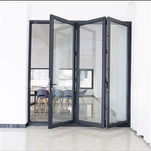


For a long time, architectural doors and windows were rarely discussed as part of the building envelope in a truly systemic sense. In many projects, they were treated as isolated components whose primary role was to fill openings rather than actively participate in the building's overall performance logic. Design teams focused on façade composition, proportions, and visual rhythm, while doors and windows were often addressed later as interchangeable products that could be selected once dimensions were fixed. This mindset reflected an era in which buildings were evaluated primarily on appearance and basic functionality, and where the envelope was not yet understood as a tightly integrated building envelope performance boundary. Under these conditions, it was common to assume that as long as a commercial window system met basic regulatory thresholds, its deeper interaction with structure, insulation, air control, and moisture management could be resolved downstream.
That assumption, however, has become increasingly misaligned with the realities of contemporary architecture. Modern buildings are no longer judged solely by how they look or whether they meet minimum code requirements at the moment of completion. They are evaluated based on how consistently they perform over time, how efficiently they manage energy, how resilient they are under environmental stress, and how predictably they behave once occupied. Within this context, the building envelope is no longer a passive wrapper but an active system that mediates between interior and exterior conditions. Doors and windows, as the most complex and penetrated elements of that envelope, carry a disproportionate share of responsibility. Treating them as late-stage product decisions introduces uncertainty into a part of the building where tolerance for ambiguity has steadily diminished.
Historically, this product-oriented approach was not without reason. Construction workflows were more linear, project schedules allowed greater flexibility, and on-site adaptation was considered an acceptable part of delivery. When conflicts emerged between drawings and reality, they were often resolved through experience-based judgment rather than formal system logic. Manufacturers and installers were accustomed to compensating for incomplete information, and such compensation was viewed as a mark of expertise rather than a sign of systemic weakness. In this environment, the separation between architectural intent and technical resolution was wide, but the consequences of that separation were manageable. Doors and windows could be adjusted, reinforced, or reconfigured without significantly undermining the overall performance expectations of the building.
As building envelopes have evolved into tightly regulated and performance-driven assemblies, this margin for adjustment has steadily eroded. Thermal continuity, air tightness, water management, acoustic control, and structural movement are no longer independent considerations; they are interdependent variables that must be resolved in coordination. A decision made in one area inevitably affects outcomes elsewhere. When doors and windows are treated as discrete products rather than as integrated systems, these interdependencies are often addressed reactively rather than proactively. The result is not immediate failure, but a gradual accumulation of compromises that become embedded in the building fabric. Over time, these compromises manifest as energy inefficiencies, maintenance challenges, and performance gaps that are difficult to trace back to any single decision.
The building envelope, when understood as a system, demands a different mode of thinking. It requires that interfaces be defined clearly, responsibilities be allocated intentionally, and performance targets be translated into physical relationships rather than abstract requirements. Within this framework, doors and windows cannot simply be selected; they must be positioned conceptually within the envelope logic. Their frame depths, thermal breaks, glazing configurations, drainage paths, and fixing methods all influence how the envelope performs as a whole. When these relationships are not articulated early, they are often improvised later, under the pressure of fabrication deadlines and construction constraints. At that stage, optimization gives way to expediency, and system coherence is sacrificed for short-term problem solving.
This shift from early definition to late adjustment has significant implications for architectural practice. During the design phase, drawings may appear complete, yet still lack the information needed to support a coherent system outcome. Opening sizes and façade layouts may be fixed, but the underlying assumptions about performance, tolerance, and integration remain implicit rather than explicit. When the project advances into detailed design and coordination, these assumptions are tested against reality. If the door and window strategy has not been developed as part of the building envelope system, the team is forced to retrofit logic into a framework that was not designed to accommodate it. This often results in localized solutions that address individual issues but do not align with a unified system intent.

From the perspective of manufacturing, the consequences of this approach are equally pronounced. When doors and windows are specified as products, manufacturers are frequently asked to interpret incomplete or ambiguous information. Decisions about profile selection, reinforcement, hardware capacity, and glazing limits are made not as extensions of a defined system, but as risk-mitigation measures. While experienced manufacturers can often deliver workable solutions under these conditions, the process relies heavily on tacit knowledge and conservative assumptions. Profiles become thicker, details become more complex, and tolerances become tighter, not because they are inherently required, but because uncertainty must be absorbed somewhere in the system. This absorption of uncertainty carries both cost and performance implications that are rarely visible at the specification stage.
The growing recognition of these challenges has led to a gradual reevaluation of how architectural doors and windows are conceived within the building envelope. Rather than viewing them as interchangeable components, more project teams are beginning to treat them as systems that require early alignment with architectural intent, structural strategy, and performance objectives. This does not imply a rigid or prescriptive approach, nor does it diminish design freedom. On the contrary, when system boundaries are defined clearly, architects gain a more reliable framework within which to explore form, proportion, and material expression. The façade becomes not just a visual composition, but a technically grounded assembly capable of delivering consistent results.
For developers and building owners, this shift has practical and financial significance. A system-oriented approach to doors and windows enables more accurate forecasting of cost, risk, and long-term value. When performance expectations are embedded in system logic rather than assumed through product selection, trade-offs can be evaluated more transparently. Decisions about upfront investment versus operational performance become informed rather than speculative. In projects where long-term asset performance is a priority, this clarity is increasingly seen as an advantage rather than a constraint. Predictability, once considered secondary to flexibility, becomes a form of value in its own right.
At the level of project delivery, treating doors and windows as part of the building envelope system alters how responsibilities are distributed across teams. Design intent is no longer handed off as a set of loosely connected drawings, but carried forward through coordinated definitions. Manufacturing becomes a continuation of design logic rather than a corrective phase, and installation is guided by clear reference points rather than experience alone. This continuity reduces the likelihood of late-stage revisions and minimizes the risk of performance drift between what was envisioned and what is ultimately built. The building envelope, in this sense, becomes a managed system rather than an accumulation of resolved problems.
This evolving perspective sets the stage for a deeper discussion about how architectural window and door systems interact with the building envelope across the full project lifecycle. Understanding this interaction requires moving beyond product attributes and toward an examination of relationships: between inside and outside, between structure and enclosure, and between short-term decisions and long-term outcomes. As performance expectations continue to rise and margins for error continue to shrink, the question is no longer whether doors and windows should be considered systemically, but how early and how clearly that system thinking is embedded into the project process.
As the understanding of the building envelope has matured, its role has expanded far beyond that of a physical separator between interior and exterior. In contemporary practice, the envelope is increasingly recognized as a performance boundary that governs thermal behavior, air movement, moisture control, acoustic isolation, and even aspects of structural response. Within this boundary, every penetration becomes a point of heightened complexity. Doors and windows are not merely openings within the envelope; they are zones where multiple performance demands converge. When these zones are not clearly defined as systems, the envelope itself loses coherence, and performance targets that appear achievable on paper become difficult to realize in practice.
One of the central challenges lies in the way system boundaries are-or are not-defined during early project stages. Architectural concepts often emphasize spatial quality, transparency, and façade expression, while technical resolution is deferred to later phases. This division can work when envelope performance requirements are modest, but it becomes problematic as expectations increase. Without early system definition, doors and windows are forced to adapt to envelope strategies that were never designed with their constraints in mind. Thermal insulation may be continuous in theory, yet fragmented at window interfaces. Waterproofing concepts may be robust at opaque walls, yet ambiguous where frames, sills, and flashings intersect. These inconsistencies are rarely intentional, but they are the predictable result of treating critical envelope components as add-ons rather than as integral parts of a unified system.
As projects progress into detailed coordination, these gaps surface through a series of small but consequential decisions. Structural tolerances, slab edge conditions, façade support systems, and interior finishes all converge at window and door openings. If the system logic governing these intersections has not been established, each discipline responds independently. Structural engineers prioritize load paths, façade consultants focus on continuity, manufacturers assess producibility, and contractors seek buildability. In the absence of a shared system framework, alignment depends on negotiation rather than logic. Solutions are reached, but they are often compromises that satisfy immediate constraints while eroding the overall clarity of the envelope strategy.
This is where the distinction between product selection and system delivery becomes most visible. When an engineered commercial window system is introduced late in the process, it must absorb uncertainties that originate elsewhere. Frame depths are adjusted to accommodate insulation that was not coordinated earlier. Hardware capacities are increased to compensate for unforeseen structural demands. Drainage details are modified to address water paths that were never clearly defined. Each adjustment may appear reasonable in isolation, yet collectively they alter the system's balance. Performance is no longer the result of intentional design, but of accumulated mitigation. The envelope still functions, but it does so with diminished efficiency and reduced predictability.
The implications extend beyond technical performance into project risk and accountability. When system logic is unclear, responsibility for outcomes becomes diffuse. Design teams may argue that specifications were met, manufacturers may point to fabrication constraints, and contractors may cite site conditions. Because no single phase owns the system holistically, deviations are difficult to trace and even harder to correct. This diffusion of responsibility is not the result of poor collaboration, but of a fragmented conceptual model. When doors and windows are treated as products, no one is explicitly tasked with safeguarding their role within the envelope system. The result is a building that technically complies, yet falls short of its intended performance over time.
From an architectural standpoint, this fragmentation can also constrain design potential. Paradoxically, deferring system decisions in the name of flexibility often reduces flexibility later on. Once envelope geometry, slab positions, and façade rhythms are fixed, the range of viable system solutions narrows rapidly. Late-stage system adjustments must work within rigid constraints, leaving little room for optimization. By contrast, when window and door systems are considered early as part of the envelope strategy, architects gain a clearer understanding of what is possible. Proportions, depths, and alignments can be explored with confidence, knowing that system performance will support, rather than undermine, design intent.
The shift toward system-oriented thinking also changes how specifications function within a project. Instead of listing isolated requirements, specifications begin to describe relationships and performance pathways. Thermal values are linked to installation conditions, air tightness targets are tied to interface detailing, and structural requirements are coordinated with frame behavior. This relational approach does not necessarily increase documentation volume, but it increases clarity. Each parameter exists within a context, making it easier for downstream teams to understand not just what is required, but why it matters. In this way, specifications become tools for continuity rather than checklists for compliance.
Manufacturers operating within this framework are no longer asked to reinterpret design intent under pressure. Instead, they participate in a defined system logic that guides decision-making. Fabrication drawings become an extension of the envelope strategy rather than a corrective exercise. This alignment reduces the need for conservative overdesign and enables more precise use of materials and components. Over time, such precision translates into more consistent quality, fewer revisions, and improved coordination across disciplines. The system, once established, supports efficiency rather than constraining it.
Ultimately, the evolution of architectural window and door systems within the building envelope reflects a broader shift in how modern projects are conceived and delivered. Complexity is no longer something to be deferred or absorbed informally; it is something to be structured, managed, and communicated. Treating doors and windows as systems acknowledges their central role in this complexity. It recognizes that performance is not an emergent property of products assembled under pressure, but the outcome of relationships defined with intention.
This perspective does not eliminate challenges, nor does it guarantee perfect outcomes. What it offers instead is a framework for making informed decisions under constraint. As projects become more demanding and margins for error continue to shrink, such a framework becomes increasingly valuable. The building envelope, when supported by coherent window and door systems, shifts from being a source of risk to a foundation for long-term performance. In this sense, system thinking is not an abstract ideal, but a practical response to the realities of contemporary construction.
As the understanding of the building envelope has matured, its role has expanded far beyond that of a physical separator between interior and exterior. In contemporary practice, the envelope is increasingly recognized as a performance boundary that governs thermal behavior, air movement, moisture control, acoustic isolation, and even aspects of structural response. Within this boundary, every penetration becomes a point of heightened complexity. Doors and windows are not merely openings within the envelope; they are zones where multiple performance demands converge. When these zones are not clearly defined as systems, the envelope itself loses coherence, and performance targets that appear achievable on paper become difficult to realize in practice.

One of the central challenges lies in the way system boundaries are-or are not-defined during early project stages. Architectural concepts often emphasize spatial quality, transparency, and façade expression, while technical resolution is deferred to later phases. This division can work when envelope performance requirements are modest, but it becomes problematic as expectations increase. Without early system definition, doors and windows are forced to adapt to envelope strategies that were never designed with their constraints in mind. Thermal insulation may be continuous in theory, yet fragmented at window interfaces. Waterproofing concepts may be robust at opaque walls, yet ambiguous where frames, sills, and flashings intersect. These inconsistencies are rarely intentional, but they are the predictable result of treating critical envelope components as add-ons rather than as integral parts of a unified system.
As projects progress into detailed coordination, these gaps surface through a series of small but consequential decisions. Structural tolerances, slab edge conditions, façade support systems, and interior finishes all converge at window and door openings. If the system logic governing these intersections has not been established, each discipline responds independently. Structural engineers prioritize load paths, façade consultants focus on continuity, manufacturers assess producibility, and contractors seek buildability. In the absence of a shared system framework, alignment depends on negotiation rather than logic. Solutions are reached, but they are often compromises that satisfy immediate constraints while eroding the overall clarity of the envelope strategy.
This is where the distinction between product selection and system delivery becomes most visible. When a commercial window system is introduced late in the process, it must absorb uncertainties that originate elsewhere. Frame depths are adjusted to accommodate insulation that was not coordinated earlier. Hardware capacities are increased to compensate for unforeseen structural demands. Drainage details are modified to address water paths that were never clearly defined. Each adjustment may appear reasonable in isolation, yet collectively they alter the system's balance. Performance is no longer the result of intentional design, but of accumulated mitigation. The envelope still functions, but it does so with diminished efficiency and reduced predictability.
The implications extend beyond technical performance into project risk and accountability. When system logic is unclear, responsibility for outcomes becomes diffuse. Design teams may argue that specifications were met, manufacturers may point to fabrication constraints, and contractors may cite site conditions. Because no single phase owns the system holistically, deviations are difficult to trace and even harder to correct. This diffusion of responsibility is not the result of poor collaboration, but of a fragmented conceptual model. When doors and windows are treated as products, no one is explicitly tasked with safeguarding their role within the envelope system. The result is a building that technically complies, yet falls short of its intended performance over time.
From an architectural standpoint, this fragmentation can also constrain design potential. Paradoxically, deferring system decisions in the name of flexibility often reduces flexibility later on. Once envelope geometry, slab positions, and façade rhythms are fixed, the range of viable system solutions narrows rapidly. Late-stage system adjustments must work within rigid constraints, leaving little room for optimization. By contrast, when window and door systems are considered early as part of the envelope strategy, architects gain a clearer understanding of what is possible. Proportions, depths, and alignments can be explored with confidence, knowing that system performance will support, rather than undermine, design intent.
The shift toward system-oriented thinking also changes how specifications function within a project. Instead of listing isolated requirements, specifications begin to describe relationships and performance pathways. Thermal values are linked to installation conditions, air tightness targets are tied to interface detailing, and structural requirements are coordinated with frame behavior. This relational approach does not necessarily increase documentation volume, but it increases clarity. Each parameter exists within a context, making it easier for downstream teams to understand not just what is required, but why it matters. In this way, specifications become tools for continuity rather than checklists for compliance.
Manufacturers operating within this framework are no longer asked to reinterpret design intent under pressure. Instead, they participate in a defined system logic that guides decision-making. Fabrication drawings become an extension of the envelope strategy rather than a corrective exercise. This alignment reduces the need for conservative overdesign and enables more precise use of materials and components. Over time, such precision translates into more consistent quality, fewer revisions, and improved coordination across disciplines. The system, once established, supports efficiency rather than constraining it.
Ultimately, the evolution of architectural window and door systems within the building envelope reflects a broader shift in how modern projects are conceived and delivered. Complexity is no longer something to be deferred or absorbed informally; it is something to be structured, managed, and communicated. Treating doors and windows as systems acknowledges their central role in this complexity. It recognizes that performance is not an emergent property of products assembled under pressure, but the outcome of relationships defined with intention.
This perspective does not eliminate challenges, nor does it guarantee perfect outcomes. What it offers instead is a framework for making informed decisions under constraint. As projects become more demanding and margins for error continue to shrink, such a framework becomes increasingly valuable. The building envelope, when supported by coherent window and door systems, shifts from being a source of risk to a foundation for long-term performance. In this sense, system-based thinking in window and door design is not an abstract ideal, but a practical response to the realities of contemporary construction.