
Why Aluminum Impact Windows Have Become the Default Choice in Coastal Projects
As coastal buildings evolve toward higher density, higher asset value, and increasingly complex risk environments, facade systems are no longer treated as simple extensions of the building envelope. Instead, they have become critical components that directly influence structural safety, long-term durability, and operational costs. Within this context, whether developers are conducting early-stage feasibility studies, architects are defining facade strategies, or general contractors are evaluating constructability and delivery risks, the selection of materials is no longer just a technical decision, but a key factor in reducing risk in coastal developments, particularly when assessing aluminum impact windows under hurricane cluster conditions.
Among various material options, the widespread use of aluminum window systems in coastal developments and multi-unit projects is not driven by a single performance advantage. Rather, it is the result of multiple engineering considerations working together. This includes their ability to contribute to structural stability, reduce long-term maintenance uncertainty, and support overall project risk control, as further explored in How Impact Window Systems Reduce Risk in Coastal Developments.
In coastal environments, buildings are primarily exposed to the combined effects of extreme wind pressure and windborne debris. Under hurricane conditions, window systems must endure continuous positive and negative pressure cycles while maintaining integrity after sudden impact events. Many traditional materials struggle under these combined loads, often experiencing cumulative deformation or connection fatigue. In contrast, aluminum alloy frames offer a high strength-to-weight ratio, allowing them to maintain structural rigidity without significantly increasing system weight. This becomes especially important in high-rise buildings, where wind loads increase exponentially with height and even minor frame deformation can affect the performance of the entire facade system.
From a practical construction standpoint, contractors are less concerned with isolated laboratory results and more focused on long-term stability under real-world conditions. Aluminum systems provide a higher level of predictability in this regard. Their material properties remain relatively stable in high-humidity and salt-laden environments, reducing the risk of uncontrolled expansion, contraction, or performance degradation over time. As a result, sealing performance-particularly airtightness and watertightness-remains more consistent throughout the building lifecycle. This directly translates into lower maintenance frequency and reduced operational costs when compared to alternative materials that are more sensitive to environmental exposure.
For architects, aluminum-framed impact windows offer not only structural reliability but also significant design flexibility. Contemporary coastal architecture increasingly favors large openings, minimal frame visibility, and continuous glass facades. These design trends require materials that can achieve both high strength and high precision. Through advanced extrusion processes, aluminum profiles can accommodate complex cross-sectional designs while maintaining slim sightlines. This allows architects to "conceal structure within form," achieving cleaner visual outcomes without compromising performance.
In multi-unit residential and large-scale developments, construction efficiency is another critical factor. Aluminum window systems are highly compatible with prefabrication and modular construction approaches. With precise manufacturing and standardized components, window units can be assembled in controlled factory environments and installed rapidly on-site. This reduces reliance on manual adjustments during installation, minimizes variability, and helps general contractors maintain tighter control over construction schedules and quality outcomes.
From a developer's perspective, material selection is rarely based solely on upfront cost. Instead, it involves balancing initial investment with long-term lifecycle value. While aluminum systems may carry a higher initial cost compared to some alternatives, their durability, performance stability, and reduced maintenance requirements often result in a more favorable long-term return. In coastal projects, where facade replacement or repair after occupancy can be extremely costly and disruptive, this long-term advantage becomes particularly significant.
At the same time, increasingly stringent energy codes have expanded the performance requirements for window systems beyond structural considerations. Aluminum systems, when combined with thermal break technology, can effectively reduce heat transfer while maintaining structural strength. This is especially relevant in hot and humid coastal regions, where improved thermal performance directly reduces cooling loads and enhances building energy efficiency. For commercial projects, these energy savings are closely tied to operational cost optimization and long-term asset value.
In complex building systems, compatibility between different components is another key consideration. Window systems must integrate seamlessly with curtain walls, balcony structures, and primary structural elements. Aluminum's high workability allows for flexible node design and customized connection solutions, making it easier to coordinate across disciplines. This reduces the likelihood of conflicts between design intent and construction execution, improving overall project efficiency.
From a regulatory standpoint, coastal projects often face stricter approval requirements, including impact resistance, wind pressure performance, and water infiltration testing. Aluminum-based systems, supported by mature engineering and extensive testing experience, are often better positioned to meet these requirements. For developers, this reduces uncertainty during approval and inspection phases, helping maintain project timelines.
In recent years, "resilience" has also become an increasingly important concept in project positioning. Impact window systems are no longer viewed as basic compliance components, but as contributors to a building's long-term competitiveness. Aluminum systems, with their structural reliability and durability, provide a solid foundation for this resilience-oriented value proposition.
As project complexity continues to grow, decision-making is shifting away from single-performance comparisons toward multi-dimensional evaluation frameworks. Structural performance, construction efficiency, lifecycle cost, and architectural expression are all considered simultaneously. Within this broader evaluation system, aluminum-framed impact windows stand out not because they excel in only one aspect, but because they offer a balanced and reliable solution across all of them.
This widespread adoption is not accidental. It is the result of repeated validation across different project types-from high-rise residential towers to large commercial complexes, and from resort developments to dense multi-unit housing. Over time, these applications have built a strong market consensus: systems that consistently perform across diverse conditions are more valuable than those that rely on isolated technical advantages.

How aluminum framed windows Improve Construction Efficiency, Durability, and Project Control
In actual project implementation, as design evolves from the conceptual stage to detailed construction, material selection begins to directly influence how efficiently different disciplines collaborate. What appears to be a reasonable facade segmentation strategy on early drawings can, without proper system compatibility, translate into complex nodes, installation challenges, and even rework risks during construction. At this stage, the systematic advantages of aluminum glazing systems become more evident. Their mature profile systems and standardized connection methods make it easier for structural engineers and curtain wall consultants to align during detailed design, significantly reducing the need for repeated cross-disciplinary adjustments.
For general contractors, the primary concern shifts to construction controllability. In coastal regions, installation schedules are often constrained by weather conditions, and any disruption in facade installation can trigger cascading delays across subsequent trades. Under such conditions, systems with a high level of prefabrication and clear installation logic offer a distinct advantage. Aluminum-framed impact windows are typically pre-assembled in factory environments, leaving only hoisting and anchoring for on-site work. This not only reduces operational complexity but also creates a more predictable installation sequence, allowing project managers to plan schedules with greater confidence and lower risk exposure.
In large-scale multi-unit developments, this advantage becomes even more critical. When a project involves hundreds or thousands of window units, small inconsistencies can be magnified significantly. Systems lacking manufacturing precision often lead to alignment issues or inconsistent sealing performance during installation. In contrast, aluminum systems benefit from industrial-level production consistency, enabling high-precision replication across units. This reliability is particularly valuable for residential projects where speed and uniformity are essential to maintaining overall project timelines.
From a lifecycle perspective, performance after occupancy becomes equally important. Coastal environments introduce long-term challenges such as salt spray corrosion, high humidity, and UV exposure. Some materials may perform adequately in the short term but degrade over time, resulting in discoloration, reduced sealing performance, or structural weakening. Aluminum systems, especially those with advanced surface treatments, offer superior resistance to these environmental factors, maintaining both structural integrity and visual consistency over extended periods. For commercial buildings, this durability directly impacts not only maintenance costs but also brand perception and asset value.
Operationally, property management teams prioritize maintenance predictability and cost control. Aluminum-based impact systems, due to their structural stability, typically require only routine inspection and replacement of seals or hardware components-processes that are standardized and manageable. In contrast, if the frame material itself deteriorates, maintenance can escalate into complex repairs or partial replacements, significantly increasing long-term operational costs. While these differences may not be immediately visible during project delivery, they become increasingly significant over a 5–10 year operational horizon.
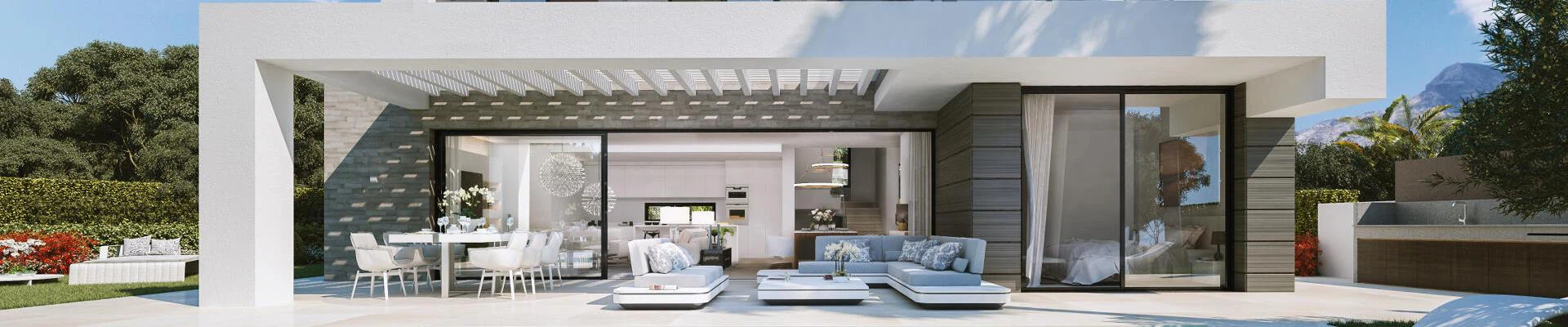
At the market level, project competitiveness is no longer defined solely by location or pricing, but increasingly by perceived product value. Large glass facades, enhanced daylighting, and seamless indoor-outdoor visual connections have become key selling points. Achieving these effects depends heavily on the framing system's ability to balance structural performance with minimal visual obstruction. Aluminum impact windows, with their ability to achieve slimmer profiles, maximize glazing area and enhance spatial quality-an advantage particularly valued in high-end residential and resort-style coastal developments.
Sustainability considerations are also becoming more prominent. Developers and architects are paying closer attention to the environmental impact of materials across the entire building lifecycle. Aluminum, as a highly recyclable material, contributes to reduced environmental burden during renovation or demolition phases. In large-scale projects, where material volumes are significant, this recyclability becomes an important factor in aligning with green building strategies and long-term sustainability goals.
From a risk management perspective, insurance providers and investors are placing greater emphasis on building resilience. Coastal developments inherently carry higher exposure to natural disaster risks, often resulting in elevated insurance costs. Projects that incorporate proven, high-performance systems-such as aluminum-based impact window solutions-can benefit from more favorable risk assessments. While this advantage may not directly reduce construction costs, it plays a meaningful role in improving financing conditions and overall return on investment.
In terms of supply chain dynamics, aluminum systems have reached a high level of industry maturity. From raw material sourcing to profile extrusion, hardware integration, and installation systems, the entire ecosystem is well-developed and standardized. This maturity provides developers with greater flexibility when selecting suppliers, reducing dependence on any single source. In an era of global supply chain uncertainty, this flexibility becomes a strategic advantage in maintaining project stability.
Considering all these factors together, it becomes clear why aluminum window solutions have become the preferred choice in an increasing number of coastal developments. Their value lies not in excelling at a single metric, but in delivering balanced performance across structural reliability, construction efficiency, design flexibility, durability, and supply chain resilience. For architects, they expand design possibilities; for contractors, they reduce execution uncertainty; and for developers, they provide stronger support for long-term asset performance and market competitiveness.
As coastal urban development continues to evolve and climate-related uncertainties increase, the demand for resilient building systems will only intensify. Material selection is gradually shifting toward solutions that have been proven through real-world applications and can maintain stable performance under complex environmental conditions. Within this trend, aluminum-framed impact window systems are steadily reinforcing their role as a foundational component in future multi-unit projects and commercial developments.

aluminum glazing systems as a System-Level Decision in Coastal Project Lifecycles
As projects move into more complex development phases, many decisions that initially appear to be "material-level choices" gradually evolve into evaluations of the overall delivery system. In large coastal developments and high-density multi-unit projects, instability in any single component can be amplified into a factor that affects the entire project's return. As a result, developers no longer assess whether a material is simply "usable," but whether it can maintain consistent reliability across the full chain of design, procurement, construction, delivery, and long-term operation. In this context, the system continuity demonstrated by aluminum framed windows has become a key reason for their repeated selection.
One of the most critical yet often underestimated aspects in real-world projects is interface management. Facade systems do not operate independently; they must integrate seamlessly with structural systems, curtain walls, balconies, shading devices, and interior finishes. For architects and facade consultants, unclear interfaces often lead to blurred responsibilities, increased coordination costs, and construction-stage complications. Aluminum systems, due to their high workability and customization flexibility, allow many of these complexities to be resolved during the design phase. By refining connection details early, project teams can define clearer boundaries and reduce downstream risks-an advantage that becomes increasingly important as project scale grows.
In cross-regional developments, another key challenge lies in balancing standardization with adaptability. Developers seek efficiency and cost control through standardized systems, yet must also respond to varying regulatory requirements, climatic conditions, and construction practices across regions. Aluminum-based systems offer a practical solution through what can be described as "adjustable standardization." Their core system remains consistent, enabling large-scale production and replication, while key parameters-such as profile thickness, glazing configuration, and hardware-can be adapted to meet specific regional demands for wind resistance, impact performance, and thermal efficiency. This flexibility is particularly valuable for developers operating across multiple markets simultaneously.
At the construction level, as project scale increases, management approaches shift from experience-driven execution to system-driven control. General contractors increasingly rely on standardized processes rather than individual craftsmanship to ensure quality and efficiency. Mature aluminum systems typically come with well-defined installation guidelines and node standards, enabling different construction teams to follow consistent procedures. This reduces variability caused by workforce differences and improves both installation efficiency and quality stability, especially under tight construction schedules.
As projects approach delivery and acceptance, performance predictability becomes critical. Coastal buildings must pass rigorous testing procedures, including wind pressure, watertightness, and impact resistance assessments. In these stages, even minor defects can result in failure and costly delays. Systems with a long track record of standardized applications-such as aluminum-framed impact windows-offer greater confidence due to their predictable performance. For developers, this translates into more controllable timelines and reduced uncertainty during final approvals.
Once the building enters operation, the true value of system selection becomes increasingly visible. Property management teams are less concerned with initial performance metrics and more focused on long-term consistency. In coastal environments, continuous exposure to wind cycles, salt spray, and temperature fluctuations places ongoing stress on facade systems. Aluminum systems, with their resistance to structural fatigue and stable connection performance, help minimize issues such as air leakage, water infiltration, and deformation over time. This stability ensures a more consistent user experience and reduces operational disruptions.
From an asset management perspective, facade condition plays a direct role in maintaining property value. For long-term holding or investment-driven developments, visible aging or performance degradation can negatively affect market perception and leasing potential. Aluminum systems, due to their durability and ability to maintain appearance over time, help preserve the building's overall quality. This "time-resistant performance" becomes an implicit value safeguard for developers.
The industry as a whole is also shifting toward a more integrated "design-to-operation" approach. Decisions made during early design stages are increasingly evaluated based on their long-term implications. Architects consider maintainability, contractors evaluate durability, and developers assess lifecycle value as part of a unified decision-making framework. Within this context, material selection is no longer an isolated decision, but a strategic node connecting all phases of a project. The continued adoption of aluminum window systems reflects their ability to support this cross-phase consistency.
Looking ahead, as climate-related uncertainties continue to increase, the demand for resilient building systems will only grow stronger. Material systems must not only meet current standards but also adapt to future requirements. Aluminum systems, with their capacity for ongoing optimization-through improved profiles, enhanced hardware, and advanced glazing integration-demonstrate a level of "evolvability" that aligns with long-term project needs. This adaptability makes them particularly suitable for coastal developments facing uncertain environmental conditions.
When these factors are considered together, it becomes clear that the widespread use of aluminum impact windows is not simply a matter of material preference, but the result of a broader system-level evaluation. For developers, architects, and general contractors, this choice reflects a shift toward lifecycle-oriented thinking, where performance, efficiency, and risk control are evaluated as interconnected variables. In this context, aluminum systems are not just components, but integral parts of a resilient and controllable project framework-one that will continue to shape decision-making in future coastal and multi-unit developments, particularly when evaluating impact glass thickness in hurricane window systems.