

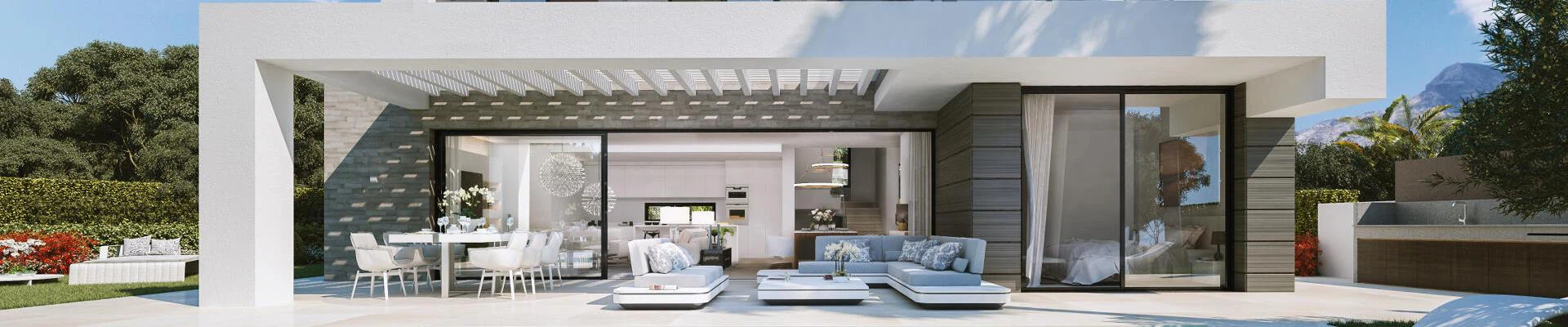
In hurricane-prone coastal areas, the design logic of building facade systems is undergoing a subtle yet profound shift. In the past, many projects focused on meeting regulatory standards when selecting window and door systems. Now, with climate uncertainty and longer asset holding periods, developers, architects, and general contractors are re-evaluating a more practical question: will these systems remain stable and functional over the next ten, twenty, or even longer years?Against this backdrop, commercial hurricane windows are no longer merely a product category meeting impact resistance standards, but are increasingly becoming part of broader strategic decisions in coastal projects, especially in developments where long-term exposure conditions are more complex.
For multi-unit residential projects and large commercial buildings, window and door system failures often don't occur as instantaneous disasters, but rather manifest as a series of gradual, cumulative performance degradations. In coastal development projects, salt spray corrosion, continuous wind pressure, humid heat cycles, and frequent torrential rains all have long-term effects on window structures, hardware systems, and sealing systems. Many projects perform well initially upon delivery, but begin to experience problems such as water leakage, seal aging, and even structural deformation when opened a few years later. These types of problems don't always stem from a single defect, but rather are the result of a confluence of numerous minor factors-the very aspects most difficult to detect in long-term risk management.
From a design perspective, architects selecting commercial hurricane window systems often need to find a balance between structural strength, opening mechanisms, facade aesthetics, and cost control. However, in actual projects, many decisions remain at the level of "whether the test reports meet the standards," ignoring the differences between different systems under long-term environmental conditions. For example, in high-rise buildings, continuous wind pressure circulation can cause fatigue effects on frame connections, an effect that is often not fully reflected in standard tests. For general contractors, this means that relying solely on initial performance during construction and system selection may lead to higher uncertainties and costs in later operation and maintenance.
In some high-end multi-unit projects along the coast, developers have begun to incorporate "lifecycle performance" into their evaluation systems. They are no longer solely focused on the impact resistance during a single hurricane event, but rather on the overall stability of the system under multiple storms, long-term exposure, and complex usage conditions. This shift in thinking has also prompted more projects to incorporate redundancy strategies in the early design stages, such as strengthening drainage path design, optimizing sealing layer structures, and improving hardware durability. While these measures may initially increase costs, they often significantly reduce maintenance frequency and risk exposure in long-term operation.
From a construction perspective, risks stem not only from the product itself but also from the quality of installation. In actual engineering projects, even certified commercial hurricane-resistant windows can encounter problems later if specifications are not strictly followed during on-site installation. This is especially true in high-rise buildings or complex curtain wall projects, where the connection between the window and the main structure, the use of sealing materials, and the treatment of joints directly affect the overall performance of the system. For general contractors, this means that risk management needs to be integrated throughout the entire process from design and procurement to construction, not just the material selection stage.
Looking further, long-term risks also manifest in changes at the material level. Take laminated glass as an example: under prolonged exposure to ultraviolet radiation and humid, hot environments, the interlayer material may age or experience slight delamination. These changes may not be immediately apparent, but over time, they can affect overall impact resistance. Similarly, the coating on aluminum profiles will gradually erode in salt spray environments, affecting their corrosion resistance. In some coastal developments, these problems often only become apparent several years after the project has been in use. At this point, replacement or repair is not only costly but may also disrupt the building's normal operation.
For developers, this uncertainty directly impacts the long-term value of assets. In commercial real estate projects, window and door systems not only affect building appearance and energy efficiency but also are closely linked to tenant experience and operating costs. Frequent leaks or structural problems during use not only increase maintenance costs but can also negatively impact occupancy rates and brand image. Therefore, more and more developers are shifting from "short-term cost control" to "long-term risk optimization," placing greater emphasis on overall reliability and stability when selecting systems.
At the same time, due to the increasing frequency of extreme weather events caused by climate change, traditional building design concepts are being re-examined. Some areas previously considered moderately risky have been frequently hit by strong storms in recent years, forcing many commercial buildings to face environmental conditions beyond their original design expectations. Against this backdrop, the role of commercial hurricane-proof windows is also changing, evolving from a "regional product" into a broader protective system applicable to various climatic conditions.
In actual project communication, it can be observed that architects' and contractors' understanding of risk is gradually converging. In the past, the design team focused more on aesthetics and standards, while the construction team focused more on feasibility. However, when faced with long-term performance issues, both sides began to realize that optimizing only a single aspect was insufficient to address systemic risks. More and more projects are adopting collaborative design models, meticulously reviewing key details early on to reduce potential problems at the outset.

This shift is particularly evident in large commercial complexes and high-end multi-unit projects. In these projects, window and door systems are no longer simple enclosure components, but rather an integral part of the overall building performance, closely linked to structure, safety, energy efficiency, and user experience. For developers, while this comprehensive consideration increases the complexity of early decision-making, it also provides a more reliable foundation for the long-term stable operation of the project.
From a broader perspective, this focus on long-term risk reflects a shift in trends across the construction industry. As project cycles lengthen and investment scales up, initial performance indicators alone are insufficient to meet the demands of complex projects. Instead, a design philosophy emphasizing system stability, adaptability, and sustainability is emerging. Commercial hurricane-resistant windows are gradually redefining their value and role in this transformation.
This philosophy will continue to evolve in future practical applications. Different regional climates, building types, and usage requirements will all place new demands on risk management strategies. For architects, general contractors, and developers involved, the ability to build more reliable systems amidst uncertainty will become a crucial factor in the success of future projects.
In increasing coastal development practices, it has become clear that what truly determines the reliability of a system is not a single performance indicator, but its ability to operate continuously in complex environments. This ability is often hidden in design details and material selection, and also reflected in the collaborative relationships between different systems. For architects, facade design is no longer just about proportion and visual expression, but requires establishing a more refined balance between wind pressure distribution, drainage paths, and structural connections. Often, a seemingly minor detail, such as the transition between window frames and the main structure, can become crucial in determining the system's stability years later.
In actual project implementation, general contractors are usually the first to notice these differences. Systems of different brands or structural forms can exhibit significant differences even during the construction phase. Some commercial hurricane-proof windows have a higher tolerance for errors during installation and are better able to adapt to site changes, while other systems are highly dependent on construction precision; even slight deviations in site conditions can cause problems later. For multi-unit residential buildings and large commercial buildings, these differences are further amplified, because the larger the building scale, the higher the probability of errors occurring in details.
Meanwhile, a phenomenon observed in years of project review and maintenance data reveals that what truly impacts long-term performance is not the extreme events themselves, but rather the "continuous effects" of the everyday environment. Repeated wind pressure loading, material expansion and contraction due to temperature differences, and the retention and discharge of rainwater at different points all contribute to the gradual changes in the system. Developers, in reviewing some projects, have found that even without experiencing major hurricanes, some door and window systems still exhibited performance degradation, and this degradation is often difficult to explain by a single cause.
Therefore, in current project decision-making, more and more teams are adopting an evaluation approach closer to engineering thinking. They no longer rely solely on product specifications or test reports, but attempt to understand the system's behavioral path in a real-world environment. For example, in coastal developments, factors such as the existence of multiple sealing structures to cope with rainfall of varying intensities, the redundancy of the drainage system, and the stability of hardware after long-term use are all taken into consideration. While this approach increases initial communication costs, it has proven effective in reducing later uncertainties through repeated practice.
In some high-rise commercial projects, the problems caused by wind loads are particularly prominent. As building height increases, wind pressure not only rises numerically but also manifests in more complex ways. When window systems are subjected to such cyclical loads over extended periods, connection points may gradually loosen, and sealing structures may be affected by minute displacements. For architects, this means anticipating these changes during the design phase and proactively addressing them through structural design and material selection. For general contractors, this means rigorously controlling the precision of critical nodes during construction to ensure the design intent is accurately achieved.
In this process, the durability of the materials themselves is equally crucial. The performance of aluminum alloy frames in coastal environments largely depends on their surface treatment processes and overall structural design. Some projects did not adequately consider the long-term effects of salt spray in the early stages, leading to localized corrosion several years later and affecting overall structural stability. For the glass components, the long-term stability of the sandwich structure is also increasingly becoming a focus. Developers have found in multiple multi-unit projects that while glass initially exhibits good impact resistance, changes in its internal materials after long-term exposure can potentially impact overall performance.
Against this backdrop, the selection logic for commercial hurricane-proof windows is constantly evolving. In the past, projects focused more on "compliance with standards," while now the emphasis is on "adaptation to the specific project environment." This means that the same system may perform drastically differently in different regions or building types. Therefore, more and more projects are beginning to conduct more detailed environmental analyses at the early stages, including factors such as wind direction, rainfall intensity, and air corrosivity, to provide a more reliable basis for system selection.
This change is also reflected in the project's cost structure. While high-performance systems typically require higher initial investment, their maintenance costs are often lower in the long run. This can be seen in commercial buildings that have been in operation for many years; projects that considered long-term risks during the design phase show significantly lower maintenance frequency and more stable overall operation. For developers, this difference is reflected not only in direct costs but also in the long-term performance of asset value.
On the other hand, the stability of construction quality has gradually become an important part of risk management. In some complex facade projects, window and door systems often need to be integrated with various materials and structures, which places higher demands on the experience of the construction team. General contractors have found in summarizing their experience that standardized construction processes and meticulous quality control are key to ensuring the long-term stability of the system. Especially at critical nodes, such as corners, splices, and connections with the curtain wall system, improper handling can easily lead to hidden risks later on.
With the continuous accumulation of industry experience, a more systematic approach is emerging. Developers, architects, and contractors no longer view their responsibilities in isolation, but are gradually establishing a collaborative mechanism to form a closed-loop management system from design to construction to operation and maintenance. Although this approach requires more communication in the initial stages, it can significantly improve the overall performance of the project in the long run.
In this collaborative model, commercial hurricane windows are no longer just an independent product, but a key node in the entire building system. They work together with the structural system, curtain wall system, and internal environment to determine the building's performance in the face of complex climatic conditions. For all parties involved in the project, this means that they need to understand and manage risks from a more holistic perspective, rather than being limited to a single product or a single phase.
When we broaden our perspective further, we find that this focus on long-term performance is fundamentally changing the logic of the construction industry. The design approach, previously oriented towards "meeting current needs," is gradually shifting towards "adapting to future changes." In this transformation, every detail can become a crucial factor influencing the outcome, and problems overlooked early on often manifest years later.
For ongoing coastal developments and large commercial buildings, the implications of this understanding are profound. It not only affects specific product choices but also redefines the standards of project success. A truly successful project is no longer just about on-time delivery and compliance with regulations; it's about stability and reliability in long-term use. Understanding and applying these experiences will become a shared challenge for developers, architects, and general contractors.
As these experiences from design, construction, and long-term operation and maintenance are gradually systematized, a clearer consensus begins to form within the industry: truly effective risk control is not about patching things up after problems arise, but about transforming uncertainty into manageable variables from the very beginning of the project. For developers, this means getting involved in the decision-making process of critical systems earlier, rather than waiting until the construction drawing stage to focus on window and door selection; for architects, it means incorporating environmental conditions, material behavior, and structural response into the overall logic from the initial facade design stage, rather than "remedying" problems by adjusting details later; and for general contractors, this process gradually shifts from executors to coordinators, requiring the establishment of more stable interface relationships between different systems.
In specific projects, this shift typically manifests as a reassessment of the supply chain. In the past, many projects tended to select window and door systems based on price or a single performance metric. Now, more and more teams are focusing on the stability and consistency of the manufacturing process. For example, even with commercial hurricane-resistant windows, differences between manufacturers in profile precision control, glass processing technology, and hardware matching will gradually become apparent during use. Some seemingly minor deviations, such as the material stability of sealing strips or the fatigue resistance of hardware, often take years to show their effects. Once problems arise, repair costs are often far higher than the initial investment.
Post-project reviews of several coastal commercial projects reveal that those that partnered with manufacturers possessing mature engineering experience from the outset tended to have more stable performance later on. This is not only due to the quality of the products themselves, but also because manufacturers can provide targeted advice during the design phase, helping architects and developers avoid potential risks. For example, in high-wind-pressure areas, adjustments can be made to the impact of different opening methods on structural stress, or redundant paths can be added to the drainage system to cope with extreme rainfall. These optimizations are often not directly reflected in standard drawings, but they play a crucial role in actual use.
At the same time, project teams are increasingly emphasizing the interrelationships between systems. In large commercial buildings, window and door systems rarely exist in isolation; they typically need to form an integrated whole with the curtain wall, structure, and interior systems. For example, in some complex curtain wall projects, the way commercial hurricane-resistant windows are connected to the curtain wall units directly affects the overall airtightness and watertightness. If this is not adequately considered during the design phase, even if the individual systems themselves perform well, problems may arise at the connection interfaces. Therefore, more and more projects are introducing interdisciplinary collaboration early on, iteratively optimizing key nodes to reduce later-stage risks.
From an operational perspective, long-term risk management also relies heavily on continuous attention during the usage phase. In multi-unit projects that have been operating for many years, those that reserved maintenance space and established reasonable maintenance cycles during the design phase show significantly better overall performance than projects that did not. For example, in high-rise buildings, the ease of inspection and maintenance of the facade system often directly affects the efficiency of problem detection and handling. For developers, while this upfront investment may not directly generate revenue, it can significantly reduce uncertainty in long-term operation.
With accumulated experience, a more mature decision-making approach is emerging. Project teams no longer simply choose between "high cost" and "low cost," but rather comprehensively evaluate short-term investments and long-term benefits through an understanding of lifecycle costs. In this process, the value of commercial hurricane-resistant windows is redefined; they are no longer merely procurement items, but key factors influencing the long-term performance of buildings. This understanding is particularly important for projects targeting the mid-to-high-end market, as their goal is not only to meet current needs but also to ensure stable performance for many years to come.
In practice, this approach is often reflected in a series of specific decisions. For example, it favors materials with long-term durability, adds necessary redundancy to system design, strengthens quality control during construction, and establishes a regular inspection mechanism during operation. These measures, seemingly scattered, form a complete risk management system, making buildings more adaptable to uncertain environments.
For architects, developers, and general contractors, this shift is not just a technological advancement, but a change in mindset. The past approach of "meeting specifications" is gradually being replaced by "optimizing long-term performance." In this context, every participant needs to redefine their role, moving from optimizing a single aspect to collaborating on the entire system.

When we return to the initial question-how to reduce risk in the long term-we can see that the answer is not concentrated on a single technical point, but rather distributed throughout the entire project lifecycle. From design, selection, construction to operation and maintenance, each stage contributes to shaping the final result. Projects that maintain consistent logic across all stages tend to demonstrate stability in long-term use, while projects lacking coordination across different stages are more likely to expose problems in the future.
This systematic approach is gradually becoming a new cornerstone for ongoing coastal development projects and commercial buildings. With increasing uncertainty in climate conditions and ever-rising market demands for building quality, relying solely on short-term indicators is no longer sufficient. Therefore, a strategy prioritizing long-term performance and overall stability is emerging, and commercial hurricane-resistant windows are playing an increasingly important role in this system.
In future project practice, this strategy centered on long-term risk will continue to deepen. With advancements in materials technology, optimization of design methodologies, and improvements in construction management, the construction industry has the opportunity to gradually establish a more mature risk control system. For every developer, architect, and general contractor involved, how these concepts are implemented in specific projects will determine the performance and value of buildings in the coming decades.
As a project moves from the design phase to actual operation, the value of many decisions gradually becomes apparent. For developers who have undergone multiple cycles of review, the truly long-term significant investments are often not the most visible parts, but rather the details incorporated into the systemic thinking early on. Windows and doors are one such example. They are neither the most expensive components nor the most complex structures, yet they continuously impact the building's safety, stability, and operational performance over long-term use.
Feedback from multiple coastal commercial projects shows that projects that planned for long-term risks from the outset are more likely to maintain stability in uncertain environments. This stability doesn't depend on the performance of a single extreme weather event, but rather gradually manifests itself over many years of use. Whether facing frequent storms, persistent hot and humid environments, or structural changes brought about by daily use, the ability of a system to consistently maintain performance ultimately determines the overall reliability of the building.
For architects, this means focusing more on the logical relationships between systems during the design phase, rather than looking at individual components in isolation. For general contractors, it means ensuring that these design intentions are accurately executed during construction and reducing potential deviations through meticulous quality control. For developers, it is even more important to establish an understanding of long-term performance early in the project, so as to make more forward-looking judgments in selection and decision-making.
It is against this backdrop that the importance of commercial hurricane-resistant windows has been redefined. They are no longer merely products designed to meet impact resistance standards, but rather key components directly related to the long-term risk control of buildings. In practical projects, selecting the appropriate system is not only a response to current regulations but also preparation for the environment to be used for decades to come.
As the industry shifts from "meeting standards" to "managing uncertainty," every decision becomes more impactful in the long term. Projects that incorporate risk considerations early on often reduce unforeseen costs and problems in the future. As more coastal developments and large commercial buildings enter this phase, this long-term performance-oriented approach will gradually become the new norm.
From this perspective, the selection of window and door systems is no longer just a procurement activity but a comprehensive judgment requiring the integration of design, engineering, and operational experience. In this decision-making process, understanding the differences in performance between different systems in real-world environments is far more valuable than a single parameter or short-term cost, especially when supported by real-world performance monitoring in commercial buildings. Commercial hurricane windows, within this evolving industry logic, become a vital link connecting initial design intentions with long-term real-world performance, particularly in multi-unit coastal developments requiring high-impact window systems.


