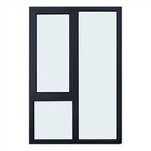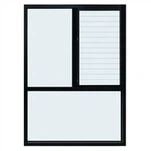

In Florida's coastal region, architecture is never simply a matter of spatial organization; it's a systemic engineering project constantly exposed to high humidity, salt spray corrosion, and extreme wind pressure. For developers, architects, and general contractors, the true determinant of a multi-unit project's success is often not the macro-planning itself, but rather the seemingly standardized component systems that bear structural and safety responsibility at critical moments. Among these, window systems have gradually shifted from being "envelope components" to "performance cores," especially evident in coastal developments facing hurricane risks. It is against this backdrop that high impact windows Florida are being reinterpreted, no longer as a simple product category, but as part of a broader strategic decision-making process in coastal commercial projects.
When a multi-unit coastal development enters its early design phase, architects typically need to find a balance between facade expression, lighting requirements, and structural safety. Traditional window systems may have advantages in terms of visual appeal and cost, but their limitations are rapidly amplified in high wind pressure and debris impact environments. Especially in mid- to high-rise commercial buildings or apartment projects, wind loads exhibit non-linear changes with height, leading to more complex local stress conditions. This makes simple product selection logic unsuitable for real-world engineering needs. Therefore, more and more developers are introducing impact window systems with complete certification systems at the concept stage to ensure that subsequent stages proceed within a unified performance framework.
In this process, the significance of high-impact windows in Florida lies not only in their impact resistance but also in their underlying system integration capabilities. For general contractors, a window system truly suitable for multi-unit projects must not only meet certification requirements such as Miami-Dade or Florida Product Approval but also possess a high degree of consistency in structural connections, sealing systems, and installation tolerances. Otherwise, during large-scale construction, even minor deviations will be amplified, impacting overall progress and quality control. This is why, in actual projects, developers often prefer system solutions already validated in similar coastal developments rather than products that solely emphasize a single performance indicator.
Furthermore, in coastal environments, wind pressure is not the only variable. The long-term corrosion of metal components by salt spray, the aging effects of continuous humidity on sealing materials, and the thermal expansion and contraction caused by temperature changes all continuously impact the building envelope. For architects, this means that material compatibility and system durability need to be considered during the design phase, rather than simply interpreting "hurricane resistance" as a one-time test success. The value of high-performance window systems here lies in their ability to achieve long-term stable performance output through the synergy of structural design, material selection, and manufacturing processes, rather than relying on the sum of individual performance points.
From a construction perspective, one of the biggest challenges contractors face in multi-unit projects is maintaining consistent installation quality while ensuring efficiency. High-rise or large-scale projects often involve hundreds or even thousands of openings. If the system itself lacks standardized design, on-site adjustments will inevitably increase time costs and risks. Optimized impact window systems, however, typically have pre-designed frame structures, anchor point layouts, and sealing paths, making the installation process more controllable. This "system pre-design" approach can significantly reduce construction uncertainty while improving overall delivery efficiency.
In practice, more and more developers are beginning to view window systems as part of their building envelope strategy, rather than as standalone product choices. The logic behind this shift is that a building's performance in a coastal environment essentially depends on the synergy between its various envelope components, rather than the performance limits of a single component. For example, in a typical coastal multi-unit project, the window system needs to form a continuous protective path with the exterior wall structure, waterproofing layer, and curtain wall joints. If any link in this chain breaks down, even if individual products pass rigorous testing, the entire system may still fail in extreme weather.

Meanwhile, the sensitivity of commercial development projects to costs and payback periods is driving window system selection towards a more rational and long-term direction. While high-performance impact windows may require higher initial investment than standard systems, their value in reducing maintenance, extending lifespan, and mitigating insurance risks is increasingly recognized by developers. This is especially true in high-risk areas like Florida, where insurance and compliance costs constitute significant project expenditures. Therefore, choosing a proven high-impact window system in Florida often yields better economic returns over the entire lifecycle.
Beyond design and construction, regulations and approval systems also profoundly influence window system selection. For architects and developers, understanding and integrating the Florida Building Code and Miami-Dade standards is not just about passing approvals, but also about ensuring sufficient safety redundancy for future extreme weather conditions. This regulations-based design mindset is making impact window systems a "basic configuration" rather than an option. This is particularly evident in multi-unit coastal developments, where the impact of a systemic failure is far greater than that of a single-family home.
As project scale expands and design complexity increases, window systems are evolving towards higher levels of integration. From initial standalone products to comprehensive solutions capable of working collaboratively with curtain walls, balcony systems, and even intelligent control systems, the role of windows is being redefined. For commercial buildings and large residential developments, this systematization trend not only enhances building performance but also provides more possibilities for later operation and management. For example, standardized maintenance is easier to achieve through unified system design, thereby reducing long-term operating costs.
Amidst these changes, a clear trend emerges: window systems are no longer passively adapting to building needs but are gradually becoming a crucial variable influencing design decisions. For developers and general contractors with extensive experience in coastal developments, integrating high-performance impact window systems into projects in advance is no longer a risk-averse strategy but a way to enhance the overall competitiveness of the project. Especially against the backdrop of ever-increasing market demands for safety and durability, this proactive system selection often demonstrates greater value later on.
As projects progress into the detailed design phase, the role of window systems becomes more concrete and direct. For architects, this stage is no longer just about abstractly discussing performance indicators, but about truly embedding the window system into the facade construction, structural connections, and node logic. Especially in multi-unit projects, different orientations, heights, and functional spaces often correspond to different opening forms. Without a unified system logic, discrepancies can easily arise between construction drawings and on-site execution. Therefore, more and more design teams are collaborating with window system suppliers early on, combining standardized modules with customized project requirements to ensure system feasibility while maintaining design expression.
This collaboration is not only reflected in dimensions and forms, but also in the continuity of performance paths. A typical problem in coastal buildings is that wind pressure, water tightness, and air tightness performance are often not determined by a single point, but are the result of the combined effects of multiple nodes. For general contractors, this means that any mishandling of any detail during construction can become a weak link in the entire system. Therefore, in practice, mature impact window systems typically control these risks upfront during the design phase through pre-designed structural interfaces and sealing solutions, rather than leaving them for on-site adjustments. It is under this logic that the value of high-impact windows in the Florida context is further amplified; they not only provide impact resistance but also reduce project execution uncertainty through systematic design.
As projects enter the large-scale construction phase, standardization and consistency become key factors influencing schedule and cost. In a typical multi-unit coastal development, the number of windows often reaches hundreds or even thousands. If each opening requires repeated on-site adjustments, both schedule and quality become difficult to guarantee. Conversely, projects with system integration completed during the design phase can typically achieve a higher degree of modular installation during construction. For contractors, this not only means a faster construction pace but also more controllable quality results, as each installation step can be completed within a predetermined process, rather than relying on individual experience.
At the same time, the complexity of construction sites constantly reminds developers that a single performance indicator does not represent overall performance. For example, in some coastal high-rise projects, even if the window itself has sufficient impact resistance, improper connection to the main structure can still lead to localized failure under extreme wind pressure. This is why more and more developers are focusing on "system compatibility" rather than "product parameters." A mature window system should have a complete logic in structural fixation, load transfer, and sealing paths to maintain stable performance under different operating conditions.
In commercial projects, this systems thinking extends further to operations and maintenance. For commercial buildings and large apartment developments, long-term maintenance costs are often a significant factor affecting return on investment. If the long-term environmental impact is not considered during the initial selection of window systems, problems such as salt spray corrosion, seal aging, and hardware wear will gradually emerge over time, leading to continuous maintenance expenses. In contrast, projects that adopt high-performance impact window systems from the design phase are typically able to maintain stability over a longer period, thereby reducing overall operational pressure. This difference is particularly evident in coastal environments, where environmental factors themselves accelerate the aging process of materials and components.
With accumulated project experience, some developers have begun to establish standardized system selection strategies across different coastal developments. Instead of starting from scratch to screen products for each project, they gradually develop a set of solutions suitable for specific regions and building types based on the performance of past projects. This strategy not only improves decision-making efficiency but also makes subsequent projects run more smoothly in design and construction. For architects and contractors, this "replicable system logic" is equally attractive because it reduces communication costs and mitigates project risks to some extent.
In this process, high impact windows Florida once again becomes a key node. It represents not only compliant products but also a proven system path. For developers who have long been active in the Florida market, choosing such a system essentially introduces a mature risk management mechanism to their projects. From performance evaluation in the early design phase to installation control during construction and stable performance in later operation, the entire chain is connected within this system. This continuity is the foundation for multi-unit projects to maintain stable performance in complex environments.
It is worth noting that as the market's requirements for building quality continue to increase, the role of window systems continues to expand. Beyond traditional safety and durability, an increasing number of projects are focusing on window performance in terms of energy efficiency and comfort. For example, in some high-end coastal residential projects, developers not only require window systems to be hurricane-resistant, but also expect them to achieve higher levels of thermal insulation, sound insulation, and light environment control. This multi-dimensional demand is further driving the transformation of window systems into comprehensive performance platforms, rather than just single-function components.
From a broader perspective, the evolution of window systems reflects how the entire construction industry responds to climate uncertainty. For coastal developments, extreme weather is no longer an isolated event but a constant variable that needs to be considered from the initial design stage. Against this backdrop, the collaboration between developers, architects, and general contractors is also changing, shifting from a division of labor to a closer collaborative relationship. As a crucial link between structural, safety, and environmental performance, window systems naturally become a core element of this transformation.
When a project finally reaches the delivery stage, the value of window systems often becomes more readily apparent. After undergoing multiple tests in design, approval, and construction, a stable and efficient system not only meets regulatory requirements but also provides a continuous sense of safety and comfort in actual use. For investors, this performance directly impacts the project's market acceptance and long-term returns; for users, it manifests in the details of daily life.
From initial design decisions to final operational performance, window systems are evident throughout the entire project lifecycle. Especially in high-risk coastal areas like Florida, choosing the right system is not only crucial to the success or failure of a single project, but also impacts a developer's long-term competitiveness in the local market. Therefore, incorporating high-impact windows in Florida into a higher-level systemic consideration has become a common choice for an increasing number of multi-unit coastal developments in the face of constantly changing environments and market demands.
Once a project enters the operational phase, the significance of the window system shifts from "project completion" to "long-term performance." For developers, this stage is often a critical moment to test the rationality of initial decisions, as the coastal environment doesn't cease to exert its influence after building handover; on the contrary, salt spray, humidity, and periodic strong winds continue to put pressure on the entire building envelope. Under such long-term effects, projects with a complete system logic established during the design and construction phases typically maintain a more stable state, while solutions relying on partial optimizations or temporary adjustments are more likely to reveal problems over time.
For property managers and asset owners, a core concern in operating multi-unit projects is the predictability of maintenance. If the window system lacks consistency across different units, maintenance needs will become highly fragmented as the years of use increase, increasing not only management difficulty but also overall operating costs. Conversely, impact window solutions designed systematically from the outset often maintain uniformity in materials, structure, and hardware configuration, allowing maintenance strategies to be standardized and thus demonstrating higher efficiency in long-term operation. This is especially true for commercial buildings, where the intensity of use is higher, and any instability will be amplified.
In market environments like Florida, insurance mechanisms also subtly influence development decisions. With the increasing frequency of extreme weather events, insurance companies are raising their evaluation standards for building envelope systems. For developers, choosing proven window systems not only helps meet regulatory requirements but may also secure more favorable terms in insurance assessments. This "implicit benefit" is often not fully quantifiable at the beginning of a project but gradually becomes apparent over the long term. Therefore, incorporating window systems into a more comprehensive risk management framework has become a consensus among a growing number of coastal development projects.
From the architects' perspective, feedback from the operational phase is also influencing design strategies. In the past, designs often focused more on initial performance; now, with the accumulation of project data, more and more design decisions are being optimized based on long-term usage. For example, in some coastal developments, observations of existing projects reveal that certain nodes are more prone to performance degradation in long-term hot and humid environments. This experience is reintegrated into new designs, continuously optimizing system details. This shift from "experience" to "strategy" transforms window system design from a one-off selection to a continuous iterative process.

For general contractors, construction experience is also continuously accumulated in this process. Repeatedly applying the same type of system in multiple multi-unit projects allows them to more clearly understand the differences in performance between different design choices in real-world environments. This experience is reflected not only in construction efficiency but also in judging system reliability. Over time, solutions that perform stably in actual projects gradually become preferred options, while designs that have problems during construction or later maintenance are naturally eliminated. This practice-based selection mechanism drives the entire industry towards a more mature and reliable direction.
It's noteworthy that, with technological advancements, window systems are increasingly connecting with more building subsystems. In some high-end coastal developments, developers are exploring integrating window systems with intelligent monitoring systems. Sensors record wind pressure, displacement, and sealing status in real time, providing early warnings before problems occur. While this trend is still developing, it demonstrates a new possibility: windows are no longer merely passive components but can participate in the overall operation and management of the building. This capability is potentially attractive to developers seeking long-term asset value.
Simultaneously, market competition is driving window systems towards higher standards. In coastal areas, particularly Florida, an increasing number of multi-unit coastal developments are highlighting "high-performance building envelopes" as a selling point. This emphasizes not only safety but also the quality of living. For end-users, while they may not understand the specific technical details, the sense of security gained in extreme weather and the comfort experienced in daily life translate into a perception of the project's overall value. In this market environment, the choice of window systems is no longer just a technical issue but is increasingly becoming part of branding and positioning.
Returning to the project decision-making process itself, a gradually clear logical chain emerges: from the initial design concept to system selection, from construction execution to post-construction operation, each stage continuously verifies the same question-whether the chosen solution can continue to function effectively in a complex environment. For developers who have long been deeply involved in the coastal market, this verification process is not a one-off event, but rather a process of accumulation and refinement through multiple projects. In this process, high-impact windows in Florida have gradually transformed from a technical option into a repeatedly proven and effective system approach, representing not only compliance, but also the ability to operate sustainably in real-world environments.
In a broader industry context, this shift reflects a transformation in architectural practice from "meeting minimum requirements" to "pursuing long-term stability." In the past, projects often prioritized compliance with regulations; now, under the dual pressures of climate risk and market competition, developers, architects, and general contractors are paying closer attention to a building's performance over the next few decades. Window systems, as a crucial interface connecting the interior and exterior environments, naturally become an important part of this transformation. Introducing mature impact window systems early in a project can reduce uncertainty later on, while supporting more informed decisions in material selection and long-term planning for coastal residential developments.
Ultimately, as these projects withstand the test of time and climate in coastal environments, their performance will become a new benchmark, influencing future design and decisions. This cycle drives the industry as a whole towards higher levels of development and gives wider acceptance to systems that can maintain stable performance under complex conditions. In this context, incorporating high impact windows Florida into the core strategy of multi-unit projects and coastal developments is no longer merely a technological choice, but a rational decision focused on long-term value.