
In the actual implementation of coastal multi-unit residential projects, window and door systems are often initially categorized as a "standard feature." Design teams select systems based on facade aesthetics, regulatory requirements, and budget control, while developers focus primarily on whether the initial procurement cost is manageable. However, once the project enters the operational phase, this "initial cost"-oriented decision-making approach often reveals its limitations. Especially in coastal developments, the building's environment is not a static condition but a variable with continuous and accumulating effects, making long-term window system performance far more complex than initially anticipated in the design phase-highlighting the importance of impact window inspection throughout the building lifecycle.
A typical phenomenon observed in retrospectives of multiple coastal multi-unit projects is the significant difference in performance between window systems of the same specifications, from the same supplier, and even by the same construction team. This difference doesn't solely stem from the product itself but is largely due to the combined effects of environmental exposure, facade orientation, floor height, and installation details. Because of this, more and more developers and architects are beginning to re-examine whether window and door systems are a "product procurement issue" or a systems engineering project that needs to be managed within a lifecycle framework.
When this issue is viewed from a long-term operational perspective, a more concrete and unavoidable reality emerges: future replacement costs. Especially in coastal environments, form systems tend to age faster than inland projects. Once they enter the mid-to-late stages, maintenance frequency and replacement needs increase significantly, all of which ultimately translates into impact window replacement costs. For developers, this is no longer just a simple maintenance budget issue, but a crucial variable directly affecting return on assets and the long-term value of the project.
The lifespan of impact windows is not a fixed value, but is influenced by both environment and design
In many product brochures and technical communications, impact windows are often described as having a certain "design lifespan," such as 15 or 20 years. However, in actual projects, this number is often not a reliable basis for decision-making. This is because the actual lifespan of a window system is not determined solely by the product itself, but is the result of the combined effects of product performance, installation quality, and the usage environment.
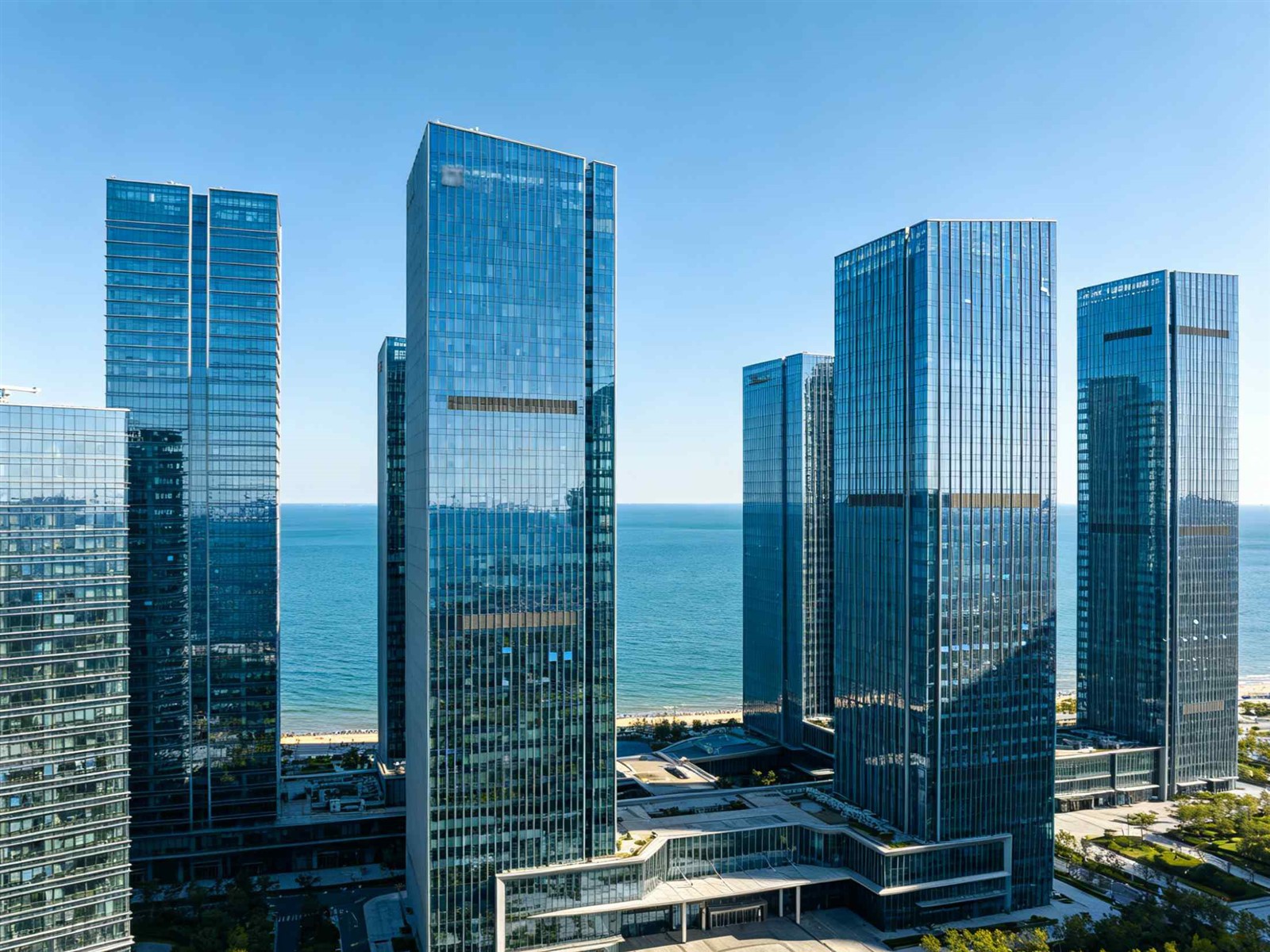
In coastal buildings, salt spray corrosion, high humidity, and continuous wind pressure have a long-term impact on window systems. This impact is amplified with height, especially in high-rise multi-unit buildings. For example, the windward side of high-rise buildings often experiences higher wind pressure and stronger rain erosion, while corners are more prone to pressure concentration areas, all of which accelerate the fatigue and aging of the window system. Simultaneously, differences in solar radiation due to different orientations also affect the durability of sealing materials and surface treatments.
In this complex environment, if a "uniform configuration" approach is adopted during the design phase, applying the same specifications of window systems to the entire facade, performance variations are likely to occur during use. Some areas may remain in good condition for up to 10 years, while others may begin to experience problems such as water seepage, deformation, or difficulty in opening and closing within a much shorter time. This uneven aging process adds extra complexity to later maintenance and replacement, as developers cannot easily solve all problems with a one-off solution.
Therefore, from a project practice perspective, rather than pursuing a uniform "design lifespan," it is more effective to consider the actual usage conditions of different areas during the design phase. More reasonable window placement and system configuration can slow down the overall performance degradation. This shift in thinking essentially represents a move from "product thinking" to "systems thinking."
A uniform design strategy can amplify later-stage problems in multi-unit projects
In multi-unit residential projects, standardized design has always been a key to improving efficiency. Both architects and general contractors typically tend to use uniform window sizes, opening methods, and installation details to reduce design and construction complexity. While this approach is reasonable in most cases, in coastal developments, if not adjusted for specific environmental conditions, it can amplify problems later.
A common scenario is that certain facades, due to more severe wind pressure or rainfall conditions, are more prone to window system problems during use. However, because the entire project uses a uniform design, developers often face a dilemma when these problems arise: should they only replace the problematic areas, or upgrade the entire system? The former may lead to inconsistent performance across different areas, while the latter means a higher one-time investment.
This situation is particularly common within 5 to 10 years after project delivery, as this stage coincides with the period when system performance begins to differentiate but has not yet completely failed. If these differences are not considered during the design phase, every subsequent decision becomes more complex and cost control becomes more difficult.
From the developer's perspective, this is a classic case of "simplification in the early stages, complexity in the later stages." From the architect's and contractor's perspective, it means that some "efficiency optimizations" during the design and construction phases may translate into greater maintenance difficulties in the future.
Replacement strategies should be considered proactively during the design phase, not reactively
In many project processes, window replacement is often treated as a "future problem," only addressed when significant performance degradation or malfunctions occur. However, in coastal multi-unit buildings, this reactive approach often leads to higher costs and greater uncertainty.
This is because window replacement is not simply a product replacement; it typically involves coordination across multiple levels, including facade systems, structural connections, and interior and exterior finishes. If sufficient operational flexibility is not planned during the design phase, the actual replacement process may require the removal of additional components, potentially even affecting the existing waterproofing system. This not only increases construction complexity and prolongs the construction period but also impacts residents and operations.
Therefore, more experienced developers incorporate the concept of "replaceability" early in the project, such as through modular design to reduce the difficulty of future replacements or by reserving adjustment space at critical junctures. While these measures may not directly reduce costs initially, they can significantly reduce later-stage uncertainty throughout the entire lifecycle.
For general contractors, this kind of early planning also means that the design intent needs to be executed more precisely during the construction phase, because any deviation in details may be magnified in the future. For architects, it means finding a more balanced solution between design expression and functional requirements.
When is it necessary to replace the window system?
In the actual operation of coastal multi-unit residential buildings, a frequently discussed question is: when is the "appropriate replacement point"? Many developers don't pay much attention to this issue in the first few years after project handover because the system as a whole is still stable. However, as time goes on, the problem quickly becomes complex when localized problems begin to appear.
In actual projects, there is rarely a clear point in time that can be simply defined as "replacement is necessary." More commonly, performance signals appear gradually, at different paces in different areas. For example, water leakage or decreased airtightness may appear earlier on the windward side of higher floors, while these problems may appear several years later on the leeward side or lower floors. This phenomenon of "asynchronous aging" makes it difficult for developers to handle the entire project with a unified decision.
In this situation, more experienced developers usually don't wait for problems to fully erupt, but instead identify early signs through periodic inspections. These signs may include increased resistance to opening hardware, hardening or cracking of weatherstripping, increased localized condensation, or minor water leakage after extreme weather. These changes don't necessarily mean the system has failed, but they are often precursors to performance degradation.
Evaluating replacement strategies at this stage allows for a better balance between cost and risk. Conversely, delaying decisions until problems erupt unnecessarily not only increases construction complexity but also makes it more likely to disrupt residents and operations.
Phased Replacement Offers Greater Control Than One-Time Replacement
In multi-unit projects, many developers initially tend towards a "one-size-fits-all" approach, meaning that once a replacement is decided upon, the entire building is updated at once. On the surface, this approach reduces management complexity, but in practice, it often faces significant challenges.
Firstly, there's the financial burden. Window systems are a crucial component of the facade, and large-scale replacement implies a substantial upfront investment, which is impractical for most projects. Secondly, there's the construction impact, especially in already occupied residential or commercial buildings. Large-scale construction not only affects the living experience but also increases coordination difficulties.
Therefore, in an increasing number of coastal developments, a more feasible strategy is "phased replacement." Specifically, the building can be divided into several zones based on facade orientation, floor height, and actual usage, and implemented step-by-step according to priority. While this approach is more complex to manage, it offers greater flexibility in cost control and construction scheduling.
From project practice, high-risk areas typically include the windward sides of high-rise buildings, corner locations, and facades with high exposure. These areas often experience performance issues first and should therefore be the focus of the first phase of replacement. Low-risk areas can be addressed later, thus spreading out the overall investment.
For general contractors, this phased strategy is also easier to integrate with routine maintenance, reducing the pressure of one-off construction. For developers, costs can be spread over a longer period, improving capital efficiency.
Design and selection directly impact future replacement costs
Many project reviews reveal that differences in the difficulty and cost of later replacements are largely not determined during the replacement phase, but rather are foreshadowed in the design and selection stages. In other words, even when replacing a form system, cost differences between projects often stem from initial design decisions.
For example, in some projects using non-standard sizes or highly customized systems, finding a perfectly matching product is difficult when replacement is needed, requiring secondary customization. This not only increases the procurement cycle but also raises costs. In projects using standardized modular designs, the replacement process is relatively simple and can even be completed without significant alterations to the original structure.
Another common problem is the installation method. If ease of disassembly and reassembly is not considered during initial construction, replacement often requires the removal of more auxiliary components, even affecting the original waterproofing layer. These "hidden costs" are often overlooked initially but can significantly increase the total cost during actual replacement.
For this reason, more and more architects and developers are beginning to incorporate "future replacement" as part of their design evaluation. This isn't about adding complexity to future problems, but rather about making future operations more controllable through more rational system selection and node design, especially when evaluating hurricane impact window systems.
From a cost perspective, this approach will ultimately be directly reflected in the impact window replacement cost. Projects with thorough upfront planning are often able to complete replacements at a lower cost later, while projects lacking planning are more prone to budget overruns.
Supplier Involvement Impacts Lifecycle Management Effectiveness
In traditional project processes, window and door suppliers typically focus on product delivery and installation, rarely participating in early design discussions. However, this model is gradually changing in coastal multi-unit projects.
This is because window and door systems are no longer just standalone products, but crucial components of the building facade system, their performance closely linked to design, construction, and environmental conditions. If suppliers only participate later, they can hardly have a substantial impact on the overall design.
In more mature projects, developers bring in experienced system suppliers early on, involving them in discussions about window placement, system selection, and node design. This collaborative approach allows for the early identification of potential problems, such as the rationality of design constraints in certain areas or the suitability of certain window opening methods for the local environment.
For architects, this involvement provides feedback closer to real-world application; for contractors, it reduces uncertainty during later construction phases; and for developers, it means a clearer expectation of future maintenance and replacement costs early in the project.
Lifecycle thinking directly impacts procurement decisions
In the actual implementation of many coastal multi-unit projects, window and door system procurement often still revolves around the core logic of "meeting regulations + controlling budget." While this approach may seem efficient and controllable in the early stages of a project, as the operational cycle lengthens, developers gradually realize that this type of decision-making overlooks a more crucial dimension-the system's performance over the next decade or even longer.
Looking at the long term, window and door systems are not components that are "installed and then finished," but rather a system that continuously participates in the building's operation. It not only affects energy consumption but also directly relates to indoor comfort, maintenance frequency, and potential safety risks. In coastal environments, this impact is further amplified because material aging and performance degradation occur significantly faster.
Therefore, more experienced developers, when making procurement decisions, no longer solely focus on product parameters but begin to pay attention to the system's stability throughout its entire lifecycle. The core of this shift lies in moving from "optimal initial cost" to "controllable long-term results." In this process, procurement is no longer just about selecting a single product but requires a comprehensive consideration of system design, installation methods, and the feasibility of future maintenance and replacement.
For architects, this means aligning goals with developers during the design phase, going beyond simply completing the facade design to ensure the system's long-term adaptability. For general contractors, this reinforces the importance of execution consistency, as small deviations in installation can accumulate into long-term performance differences.
System selection determines future cost controllability
A very clear conclusion from project reviews is that the differences between systems are not only reflected in initial price, but also in long-term performance stability and operational complexity. Some systems may seem more cost-effective initially, but after a few years, the increased maintenance frequency or higher replacement difficulty will gradually widen the gap with high-performance systems.
This gap is particularly evident in coastal developments. In high salt spray and high humidity environments, differences in material performance are amplified. For example, the durability of profile surface treatments, the corrosion resistance of hardware, and the stability of sealing systems will gradually become apparent over long-term use. If these factors are not adequately considered during the selection phase, developers often face more frequent maintenance or even premature replacement in the later stages.
Meanwhile, system design itself also affects future costs. For example, whether a modular design is adopted, whether it has a good drainage structure, and whether it is easy to disassemble and reassemble-these seemingly minor design choices will translate into differences in construction difficulty and cost during actual replacement. In other words, a system that is "easy to maintain and easy to replace" often incurs a lower total cost over its lifecycle than a solution that is cheaper initially but more complex to operate later.
From this perspective, the cost of replacing impact-resistant windows is not an independent factor, but rather determined by the initial selection, design, and construction. If these factors are ignored in the early stages of a project, this expense will be almost unavoidable at some point in the future.
Supplier Capabilities Impact Long-Term Performance Stability
In an increasing number of coastal multi-unit projects, developers are reassessing the role of suppliers. Previously, window and door suppliers were primarily seen as product providers, but this singular role is insufficient to meet the demands of complex environments.
This is because the performance of a window and door system depends not only on the product itself but also on design compatibility, installation quality, and after-sales support. If a supplier only provides standard products without understanding the project environment and usage scenarios, even if the product parameters meet specifications, it may not achieve the expected results in actual use.
Conversely, suppliers with project experience can often provide more targeted advice during the design phase, such as adjusting system configurations based on different facade conditions or optimizing node designs in key areas. While this adds early-stage coordination effort, it improves decision accuracy in system selection and detailing.
For general contractors, collaborating with experienced suppliers also means obtaining clearer technical support during the construction phase, reducing uncertainty. For developers, this collaborative model helps establish a more stable system foundation early in the project, making later maintenance and replacement more controllable.
Lifecycle planning is a core tool for controlling project risk
Looking back at the long-term operation of coastal multi-unit residential projects, a gradually clear trend emerges: projects that incorporate lifecycle thinking from the outset tend to perform more stably in later stages, while those focusing solely on initial costs are more prone to concentrated problems in the mid-to-late stages.
This difference is not accidental but stems from different decision-making logics. The former incorporates future uncertainties into the design, selection, and construction phases, gradually reducing systemic risk through a series of seemingly minor adjustments; the latter relies more on the "compliance with regulations is sufficient" standard, and problems gradually emerge once environmental factors begin to take effect.
In this context, lifecycle planning is no longer an add-on option but an indispensable part of coastal developments. It not only affects the performance of the window and door systems themselves but also relates to the cost structure and operational efficiency of the entire building over long-term use.
From the developer's perspective, this planning ultimately translates to more stable asset performance; from the architects' and contractors' perspective, it means undertaking more thinking and coordination work in the early stages of a project, but in return, it results in a more controllable execution process and less uncertainty later on-especially when supported by ongoing impact window testing in commercial buildings.
When these factors are evaluated together, impact window replacement cost is ultimately not a material expense issue, but a reflection of how well lifecycle risks were anticipated and controlled during early-stage design and system coordination. In coastal developments, the difference between projects is often defined long before replacement becomes necessary.