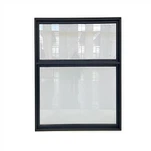

For Florida coastal developers, general contractors, and fenestration specifiers, compliance verification is the top priority of window system procurement. Unlike conventional residential windows sold in general markets, all exterior opening products installed in Florida's hurricane-prone zones must pass official certification testing and hold valid qualification documents to pass plan review, onsite inspection, and final occupancy approval. Many procurement teams often confuse Miami-Dade NOA and Florida Product Approval, two core compliance credentials, resulting in specification errors, inspection failures, or over-investment in redundant certifications. To eliminate project compliance risks and select qualified building envelope solutions efficiently, it is essential to study Florida NOA window standards, clarify the differences, application scenarios, and matching rules of the two certifications, and select standardized Florida-certified impact windows that perfectly match project locations and building grades.
What Are Florida Approved Windows and Why Do They Matter
Florida hurricane-rated windows refer to code-compliant impact window and door systems that have passed standardized performance testing, obtained official certification files recognized by Florida building authorities, and meet local hurricane resistance, water tightness, structural safety, and energy-saving regulations. These specialized window products are exclusively designed and produced for Florida's unique high-risk marine and hurricane climate, covering residential villas, multi-family apartment buildings, coastal commercial complexes, resort projects, and high-rise waterfront buildings.
The core value of coastal impact window systems lies in project compliance and long-term building safety. Florida's High-Velocity Hurricane Zone (HVHZ) covering Miami-Dade and Broward County implements the strictest building codes in the United States, requiring all exterior fenestration products to resist Category 5 hurricane winds, wind-borne large missile impacts, and cyclic alternating positive and negative wind pressure. Uncertified ordinary windows are completely prohibited from being used in coastal wind zones. For construction projects, adopting qualified hurricane-resistant fenestration products is not only a basic requirement for smooth project acceptance but also a key measure to reduce storm damage risks, lower annual property insurance premiums, and maintain long-term building asset value.
It is worth noting that "Florida approval" is a general term for qualified fenestration products, and its compliance system mainly includes two core certification types: Miami-Dade NOA and statewide Florida Product Approval. The two have different testing standards, applicable scopes, and authority levels, directly determining the applicability of code-compliant Florida impact windows in different Florida regions.

What Is Miami-Dade NOA Certification for Windows
NOA, short for Notice of Acceptance, is a strict product certification issued by the Miami-Dade County Building Department, representing the highest standard of hurricane fenestration compliance in Florida and even the entire North American hurricane zone. As a localized rigorous certification for the HVHZ region, NOA certification is tailored for extreme weather conditions in Miami-Dade and Broward counties, where wind speed and impact load requirements far exceed the statewide average standard.
Windows applying for NOA certification must complete a full set of rigorous third-party tests in accordance with TAS (Testing Application Standard) protocols, including TAS 201 large and small missile impact resistance tests, TAS 202 comprehensive performance tests covering air infiltration, water penetration and structural load capacity, and TAS 203 cyclic pressure aging tests that simulate long-term hurricane wind cycling. These tests fully replicate extreme working conditions such as instantaneous storm impact, continuous high wind pressure, and wind-driven rain erosion, verifying that the window system will not break, leak, or deform under Category 5 hurricane attacks.
NOA certification features strict product binding and non-universal applicability. Each NOA certificate corresponds to a specific window series, profile structure, glass configuration, and hardware combination, with traceable and verifiable parameter information. Any change in material specifications will invalidate the certification. In actual project review, local building departments in the HVHZ region prioritize NOA qualifications, and NOA-certified window products are universally recognized as high-reliability storm-resistant fenestration solutions for extreme hurricane zones.
What Is Florida Product Approval for Fenestration Products
Florida Product Approval is a statewide unified certification managed and issued by the Florida Building Commission, applicable to all 67 counties in Florida. It is a basic compliance qualification for all fenestration products entering the Florida construction market, covering windows, exterior doors, skylights, and other building envelope components. Different from the region-specialized NOA certification, Florida Product Approval focuses on universal standard compliance of products, adapting to conventional wind zone projects outside the core HVHZ region.
The testing standards of Florida Product Approval also follow official Florida building code specifications, covering core indicators such as wind load resistance, water tightness, air tightness, and basic impact resistance, which can meet the safety and performance requirements of most inland and ordinary coastal projects in Florida. Products that obtain this certification can be freely used in non-HVHZ areas of Florida, with wide market applicability and flexible project matching.
In terms of management mechanism, Florida Product Approval has a standardized state-level filing system. All approved products have unified public record numbers, which developers and supervisors can query and verify through the official platform. It is the most widely used basic certification for Florida-certified impact windows in Florida's general construction projects, solving the universal compliance needs of conventional residential and commercial buildings.
Core Differences: NOA vs Florida Product Approval for Windows
Most developers and contractors confuse the two certifications due to overlapping compliance functions, but there are essential differences in applicable scope, testing rigor, project requirements, and authority priority, which directly affect the specification and inspection results of Florida approved windows.
First, applicable scope and regional authority. NOA is a high-standard certification exclusively applicable to Miami-Dade and Broward HVHZ regions, with regional mandatory priority; Florida Product Approval is a statewide universal certification, covering all Florida counties but with no priority in core HVHZ zones. Projects in extreme hurricane core areas must prioritize NOA-qualified products, while ordinary coastal and inland projects can adopt Florida Product Approval-certified windows.
Second, testing rigor and performance threshold. NOA adopts stricter TAS full-cycle extreme tests, including super-large missile impact and high-frequency cyclic pressure tests, adapting to 156–185 mph extreme wind speed environments; Florida Product Approval adopts conventional standard tests, meeting conventional hurricane resistance needs without extreme load verification. NOA-certified windows have stronger extreme weather resistance and longer durability.
Third, certification specificity and flexibility. NOA has extremely strict parameter binding, with each certificate corresponding to a single fixed window model and configuration, no arbitrary parameter replacement; Florida Product Approval allows relatively flexible product iteration and specification adjustment within the standard range, with lower update threshold for manufacturers. Fourth, inspection priority: in HVHZ project reviews, NOA qualifications can cover statewide approval needs, while Florida Product Approval alone cannot meet HVHZ mandatory standards.
Do Florida Aluminum Windows Need Dual Certifications?
In actual project procurement, aluminum coastal impact window systems do not need blind dual certification stacking, and the matching standard should be strictly based on the project's specific location and wind zone classification, avoiding unnecessary cost waste and certification redundancy.
For projects located in Miami-Dade, Broward and other core HVHZ high-risk hurricane zones: NOA certification is mandatory. A single Florida Product Approval cannot pass local building inspection. Windows must hold valid NOA certificates that match the project wind load grade and product configuration. Meanwhile, NOA qualifications can be recognized statewide, meeting the dual compliance needs of local extreme standards and statewide basic specifications.
For projects in ordinary coastal areas, inland cities, and non-HVHZ wind zones of Florida: only valid Florida Product Approval is required to complete filing and inspection. Blindly purchasing full NOA-certified windows will increase unnecessary procurement costs without bringing additional compliance advantages.
For large-span batch projects covering multiple wind zones and cross-regional construction, professional manufacturers will provide targeted certification matching solutions: equipping high-risk windward facades with NOA-certified windows and non-core areas with Florida Product Approval products, balancing project compliance and cost control to the greatest extent.
How to Choose Florida Approved Aluminum Windows for Coastal Projects
Selecting qualified code-compliant Florida impact windows for coastal projects needs to follow the logic of "regional matching first, performance second, and certification verification third", avoiding specification errors and compliance risks.
First, confirm project wind zone attributes in advance. Clarify whether the construction site belongs to the HVHZ core zone or ordinary coastal wind zone, and lock the mandatory certification threshold of the project to ensure the window certification level matches local code requirements. Second, verify the authenticity and specificity of certification documents. Require manufacturers to provide original valid NOA or Florida Product Approval reports, check whether the certificate parameters match the actual window profile thickness, glass configuration, and hardware specifications, and avoid generic certificates and expired qualifications.
Third, match performance indicators according to building height and exposure degree. High-rise windward buildings need high-DP wind pressure resistance, enhanced SGP laminated impact glass, and marine-grade anti-corrosion hardware; low-rise residential buildings can adopt conventional matching schemes on the premise of meeting certification standards. Fourth, prioritize aluminum window systems with complete certification iteration capabilities, ensuring that products can adapt to updated Florida building codes and avoid project compliance delays caused by certification expiration.

Benefits of Certified Florida Approved Aluminum Windows for Developers
Certified aluminum Florida-certified impact windows have become the preferred solution for Florida coastal developers, bringing multi-dimensional value in project compliance, cost control, risk avoidance, and asset value preservation compared with uncertified or low-standard products.
In terms of project progress, fully certified windows eliminate inspection rejection risks, ensure smooth plan review and handover, and avoid construction suspension and rework losses caused by non-compliant fenestration. In terms of safety performance, aluminum window systems with NOA and Florida Product Approval certifications have passed extreme storm tests, with stable structural rigidity, impact resistance, and water tightness, effectively avoiding window damage, water seepage, and building envelope failure during hurricane seasons.
In terms of long-term operation, high-standard certified aluminum windows have excellent salt corrosion resistance, UV aging resistance, and thermal insulation performance, greatly reducing later maintenance frequency and replacement costs. Meanwhile, compliant hurricane-resistant windows can significantly reduce project property insurance rates, bringing continuous cost savings for building operation. In terms of market value, standardized certified fenestration systems unify building façade aesthetics and improve the overall quality and premium capability of coastal real estate projects.
YY Custom Florida Approved Aluminum Window Solutions
As a professional manufacturer focusing on North American coastal high-rise and residential fenestration projects, YY Windows provides fully compliant, customized Florida approved windows covering NOA and Florida Product Approval dual certification systems, targeting Florida's diverse wind zone and project type requirements.
YY Windows has completed full TAS standard extreme performance testing for aluminum window series, holding valid NOA certifications for HVHZ core zones and statewide Florida Product Approval qualifications. All product parameters, including profile wall thickness, thermal break structure, SGP/PVB laminated glass, and 316 marine-grade hardware, strictly match Florida building code requirements, ensuring 100% pass rate for project inspection and filing.
Aiming at differentiated project needs, YY provides targeted certification matching solutions: configuring high-standard NOA-certified reinforced aluminum window systems for Miami-Dade and Broward extreme wind zone projects, and cost-effective Florida Product Approval compliant products for ordinary coastal and inland projects, helping developers accurately balance compliance safety and project budget.
In addition to standardized certified products, YY supports full ODM customized services including façade color, opening mode, structural reinforcement, and drainage system optimization, matching high-end residential, commercial complex, and resort project design standards. With mature Florida project engineering experience, complete quality control systems, and long-term after-sales guarantee mechanisms, YY Windows masters the certification process for coastal impact windows and solves the core pain points of difficult certification matching, unstable product quality, and insufficient technical support for Florida coastal construction projects, becoming a reliable long-term supplier for North American coastal developers and contractors.