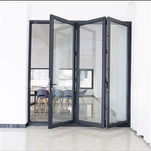

Modern multi-unit residential projects, including mid-rise and high-rise apartment complexes, townhome communities, and waterfront residential towers, present significantly more complex façade requirements than traditional single-family construction. Unlike standalone residential buildings, these developments depend on standardized window systems, repeatable installation processes, and consistent compliance across large-scale unit counts, where insulated aluminum windows are increasingly adopted as a core façade solution for performance consistency and system coordination.
Across recent residential projects in coastal and urban regions, design teams are increasingly working under two competing pressures in coastal and urban residential projects. On one hand, there is strong demand for larger glazed areas, slimmer aluminum frames, and improved natural daylighting to meet market expectations. On the other hand, stricter energy codes and façade performance requirements are placing greater constraints on window system selection and planning.
This tension has made window system planning a more critical early-stage consideration in multi-unit residential development, particularly when balancing architectural intent with regulatory and performance requirements.
Why Window Planning Has Become More Complex in Multi-Unit Residential Projects
Window planning for multi-unit residential construction has evolved from a simple product selection process into a coordinated façade system decision. In large-scale residential developments with hundreds or even thousands of repetitive units, each window specification influences overall façade consistency, construction sequencing, cost control, regulatory compliance, and long-term operational performance.
Unlike single-family projects, multi-unit residential buildings require a high degree of standardization while still responding to varying site conditions such as building height, orientation, wind exposure, and internal mechanical loads. This creates a planning environment where window systems must be evaluated not only at the unit level, but also at the building-wide performance level.
As residential building codes continue to tighten across energy efficiency, air infiltration, and water resistance requirements, design teams can no longer rely on generic or uniform window specifications. Instead, window planning has become an early-stage coordination task within the overall façade strategy, where system-level decisions play a defining role in project feasibility and long-term building performance.

How Insulated Aluminum Windows Improve Thermal and Energy Performance in Residential Buildings
One of the most frequently observed performance challenges in modern multi-unit residential projects is thermal imbalance caused by continuous aluminum framing without effective thermal separation. In large glazed façades, uninsulated aluminum window systems allow heat to transfer directly through the frame, reducing the overall thermal efficiency of the building envelope and increasing the operational demand on residential HVAC systems.
In coastal and subtropical residential environments, these conditions become more pronounced due to strong solar exposure and high humidity levels. Variations in façade orientation further amplify performance differences between units, where certain elevations experience higher heat gain while others are more prone to surface cooling conditions during air-conditioning cycles. These inconsistencies often contribute to uneven indoor thermal conditions across identical residential units.
Insulated aluminum window systems address these issues through a thermally broken frame design that reduces direct heat transfer between interior and exterior environments. By improving thermal separation within the window assembly, the system helps stabilize frame surface temperatures and supports more balanced thermal behavior across different façade orientations in multi-unit residential buildings.
Why Air, Water, and Structural Coordination Must Be Considered Early in Window System Planning
Most multi-unit residential window performance issues are not caused solely by product selection, but by late-stage coordination between multiple building systems. In fast-track residential construction projects, window specifications are often finalized after structural framing, exterior insulation layouts, and waterproofing assemblies have already been established, which limits the ability to achieve proper system integration.
In practice, three recurring coordination challenges are commonly observed on multi-unit residential job sites. Air infiltration issues can occur when window frame dimensions are not properly aligned with exterior insulation thickness, resulting in inconsistent sealing interfaces. Water management problems may arise when window flashing details are not fully coordinated with façade waterproofing layers, increasing the risk of concealed moisture intrusion. Structural performance discrepancies can also appear when standard window systems are not adequately designed to accommodate wind load movement and long-term façade deflection in high-rise buildings.
Insulated aluminum window systems help address these coordination challenges by providing more defined system parameters for frame depth, interface detailing, and structural performance expectations. When incorporated during early design development, these system-based window specifications improve alignment between architectural intent, façade engineering, and construction sequencing, reducing the need for extensive field adjustments during installation.
How Insulated Aluminum Window Configurations Improve Ventilation, Daylighting, and Occupant Comfort
In modern multi-unit residential developments, occupant comfort consistency has become a key design objective, particularly in projects that prioritize floor-to-ceiling glazing and high-transparency façade designs. While large window openings improve daylight access and visual quality, they also introduce challenges related to thermal comfort when not properly supported by the window system design.
In many residential buildings using insulated aluminum window systems, oversized glazing can result in uneven indoor comfort conditions, including excessive solar heat gain in warmer seasons, reduced surface temperature comfort near window zones during colder periods, and localized airflow discomfort around perimeter joints. These conditions often vary between units depending on façade orientation and exposure.
Insulated aluminum window configurations help maintain architectural intent for large openings while supporting more stable indoor environmental conditions. By improving frame thermal performance and allowing more controlled combinations of fixed and operable glazing, these systems support balanced daylight distribution and more predictable ventilation performance across multi-unit residential layouts.
Why Acoustic Performance and Long-Term Durability Define Residential Window System Value
In multi-unit residential environments, acoustic performance and long-term durability are critical factors influencing overall building quality and resident satisfaction over time. Urban residential developments are often exposed to continuous external noise sources such as traffic corridors, nearby commercial activity, and ongoing urban development, while internal unit density increases the potential for sound transmission between adjacent living spaces.
Over time, conventional aluminum window systems may experience gradual performance changes due to hardware wear, weatherseal aging, and minor frame movement caused by repeated thermal and mechanical stress. These conditions can lead to reduced acoustic consistency and increased variability in noise control performance across long-term building operation.
Insulated aluminum window systems are designed to support more stable structural and sealing conditions over extended service cycles. By improving frame rigidity and reducing exposure to internal condensation and moisture-related stress, these systems help maintain more consistent acoustic performance and material behavior over the building lifecycle.
Key Developer and Architect Evaluation Criteria for Insulated Aluminum Windows in Residential Projects
When selecting window systems for modern multi-unit residential developments, developers and architectural teams increasingly evaluate performance based on long-term system behavior rather than upfront material cost alone. In large-scale residential projects, low-cost window systems often introduce indirect challenges such as coordination inefficiencies, inconsistent performance outcomes, and increased long-term maintenance exposure.
One key evaluation factor is thermal performance consistency across different building conditions. Decision-makers typically assess whether insulated aluminum window systems can maintain stable thermal behavior across varying façade orientations, floor levels, and exposure conditions, while supporting predictable condensation control and envelope performance.
Another important consideration is construction and installation compatibility. Window systems that provide clearer interface definitions for air sealing, waterproofing integration, and structural load coordination are generally easier to incorporate into repetitive multi-unit installation workflows, reducing complexity during façade execution.
Long-term durability and occupant experience are also central to evaluation. Factors such as frame stability, acoustic consistency, and material resilience under continuous environmental exposure are assessed in relation to expected building lifecycle performance and post-occupancy operational requirements.
In practice, these criteria are used collectively to compare different window system options within the broader façade design strategy, rather than relying on a single performance metric or isolated product specification.

Conclusion
Multi-unit residential window planning has increasingly shifted from a product-based selection process to a system-level façade design decision. As building codes, energy performance requirements, and construction complexity continue to evolve, window systems are no longer evaluated in isolation, but as an integrated part of the overall building envelope strategy.
In this context, insulated aluminum windows are widely adopted because they align with the multi-dimensional requirements of modern residential developments, including thermal performance consistency, façade coordination, installation efficiency, and long-term operational stability. Rather than addressing a single performance metric, they support a more balanced response to the combined challenges of design intent, regulatory compliance, and construction feasibility.
For developers, architects, and project teams, early-stage window system planning has become a critical step in reducing downstream risks and ensuring predictable building performance across large-scale residential projects. Selecting a system that is properly aligned with these planning requirements can significantly improve coordination between design, engineering, and construction teams throughout the project lifecycle.