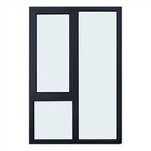

For residential and commercial developers, property owners, and facility managers, window selection is no longer a simple aesthetic or construction detail-it is a long-term capital investment. While standard-grade window systems reduce upfront project costs, they often lead to continuous energy waste, frequent maintenance expenses, and premature replacement losses over decades of building operation. In contrast, high-performance aluminium window systems represent a value-engineered building solution that balances premium initial quality with exceptional long-term returns for coastal and hurricane-prone construction projects. Understanding the true long-term ROI of advanced aluminium window systems helps industry stakeholders make data-driven decisions, avoid short-sighted cost cuts, and maximize the full lifecycle value of high-rise, coastal, and luxury residential construction projects.
What Defines High Performance Aluminium Windows
High-performance window systems are premium, system-grade fenestration solutions engineered with upgraded materials, precise structural design, and advanced thermal technology, far exceeding the performance standards of generic builder-grade windows. Unlike ordinary aluminium windows that only meet basic sealing and structural requirements, high-performance models are optimized for energy efficiency, weather durability, structural stability, and long-term operational reliability.
Core defining characteristics include high-strength aluminium profiles with stable structural rigidity, multi-layer insulated glazing configurations, advanced thermal break structures, high-quality EPDM sealing systems, and corrosion-resistant marine-grade hardware. Every component is precisely engineered to reduce heat transfer, resist extreme weather erosion, minimize air and water infiltration, and maintain consistent performance for 25 to 30 years or more. These integrated upgrades fundamentally distinguish aluminium window systems as a long-term asset rather than a disposable construction component.
Why They Deliver Long-Term Sustainable Value
The sustainable value of energy-efficient window systems stems from their ability to shift project cost logic from "short-term construction expenditure" to "long-term operational savings". Standard windows appear cost-effective during construction but generate continuous hidden costs including high energy consumption, seasonal maintenance, seal aging failure, and early replacement. Over a building's 30–50 year service life, these cumulative expenses far exceed the initial price difference of premium windows.
High-performance window systems eliminate most long-term variable costs while locking in stable building performance. Their durable structure adapts to cyclic temperature changes, coastal salt erosion, and strong wind pressure, avoiding frequent partial repairs and overall replacement. Meanwhile, consistent energy-saving performance reduces building carbon emissions and meets green building certification requirements, improving project market competitiveness and asset appreciation potential. For developers and property investors, this stable, low-risk, and value-holding attribute forms sustainable long-term investment returns that ordinary windows cannot match.
Energy Efficiency and Operational Cost Savings
Energy conservation is the largest and most stable source of ROI for aluminium window systems. Building fenestration is the weakest link in building thermal insulation, and ordinary windows cause significant cooling and heating energy loss through heat conduction, air leakage, and radiation heat transfer. In high-rise commercial buildings and coastal residential projects with long-term air conditioning demand, this energy waste forms a huge recurring operational expense.
High-performance window systems solve this pain point through systematic thermal optimization. The insulated double or triple glazing blocks external heat radiation and internal cold air loss, while precise sealing technology eliminates invisible air leakage. Cooperated with professional thermal break structures, the whole window system significantly reduces the window system's heat transfer coefficient (U-value). Practical project data shows that qualified high-performance window systems can reduce building HVAC energy consumption by 20%–35% throughout the year. For large-scale residential communities, high-rise office buildings, and resort projects, the annual electricity and energy cost savings form continuous and considerable cumulative returns, becoming the core support of long-term ROI.

Lifecycle Cost vs Initial Investment
Most procurement decisions overlook long-term lifecycle costs by focusing only on initial installation expenses. Generic ordinary windows have low upfront investment, but their short service life, high failure rate, and increased energy consumption lead to significantly higher long-term operational costs. In contrast, thermal break window systems have a slightly higher initial procurement cost, but they achieve comprehensive cost reduction in the whole operation cycle.
The cost difference across the full lifecycle can be analyzed in three core dimensions. First, energy cost: high-performance windows maintain low energy consumption for decades, while ordinary windows suffer from rising energy waste year by year due to aging sealing and degraded thermal insulation. Second, maintenance cost: standard windows require regular seal replacement, hardware maintenance, and glass repair, while high-performance systems almost eliminate daily maintenance needs. Third, replacement cost: ordinary windows need overall renewal in 10–15 years, while high performance aluminium windows maintain intact performance for more than 30 years. From the perspective of full project lifecycle, premium high-performance window systems have far lower comprehensive costs and higher net investment returns.
Payback Period of Window System Upgrades
The payback period for upgrading to these systems is typically clear and predictable, which is an important basis for developers' financial evaluation of construction projects. Affected by regional climate, building type, and project scale, the average payback cycle of high-performance window upgrades is concentrated between 5 to 8 years, after which the energy savings and maintenance cost reductions are completely converted into net project profits.
For high-energy-consuming buildings such as high-rise office towers and large commercial complexes, the payback period is shorter, basically 4–6 years, due to long-term continuous HVAC operation. For coastal residential projects with high humidity and strong weather erosion, the accelerated aging rate of ordinary windows further shortens the return cycle of high-performance products. After completing cost recovery in the early and middle stage of building operation, high-performance glazing systems will bring 20+ years of pure profit cycle for the project, greatly improving the long-term asset income level of real estate projects.
Durability and Low Maintenance Benefits
Durability and low-maintenance advantages are key secondary profit points of energy-efficient window systems, effectively avoiding hidden cost losses caused by product aging and failure. Ordinary aluminium windows are prone to profile oxidation, seal aging, hardware rust, and glass fogging after 5–10 years of use, especially in coastal high-salt and high-humidity environments, with faster aging speed and higher failure probability.
These systems adopt industrial-grade anti-corrosion treatments including thickened powder coating and anodized profiles, combined with 316 marine-grade stainless steel hardware and weather-resistant EPDM seals. The system provides strong resistance to oxidation, aging, and salt-fog corrosion, ensuring long-term performance in harsh environments. In the whole service cycle, there is no need for frequent maintenance and replacement of accessories, which saves a lot of labor costs, material costs, and property management time costs for building operation. At the same time, stable and intact window performance avoids rework losses and user complaints caused by water leakage and air infiltration, reducing project operational risks.
The Role of Thermal Break Technology in ROI Optimization
Thermal break systems are the core technical foundation for aluminium window systems to achieve ultra-high energy efficiency and optimize long-term ROI. Ordinary aluminium profiles are highly thermally conductive, forming obvious thermal bridges at window frames, leading to significant heat loss and indoor condensation issues, which greatly weakens the thermal insulation effect of insulating glass.
The professional thermal break structure uses high-strength heat-insulating strips to isolate the internal and external aluminium profiles, completely cutting off the thermal bridge conduction path of the window frame. This technology significantly reduces the window system's overall U-value, realizes synchronous thermal insulation of frame and glass, and avoids local heat concentration and energy leakage. In summer, it blocks outdoor high-temperature heat from entering the room and reduces air conditioning load; in winter, it locks indoor heat and reduces heating energy consumption.
In addition to energy savings, thermal break technology also eliminates condensation and mildew problems caused by frame temperature difference, protecting indoor decoration and building wall structure, and indirectly reducing building maintenance and renovation costs. This comprehensive performance upgrade greatly amplifies the long-term ROI advantage of high-performance window systems.
Developer Evaluation Criteria for High-Rise and Coastal Projects
When evaluating high-performance aluminium window systems for high-rise and coastal projects, stakeholders no longer take unit price as the core standard, but comprehensively judge from lifecycle ROI, structural safety, and long-term asset stability. For high-rise buildings, window systems must withstand strong wind pressure and cyclic load changes, requiring excellent structural rigidity and overall stability to avoid safety hazards and later rectification costs.
For coastal hurricane-prone projects, windows must have salt corrosion resistance, weather aging resistance, and storm impact resistance to adapt to harsh marine climates and ensure long-term stable performance. In addition, developers will focus on product certification compliance, standardized installation systems, and manufacturer after-sales capabilities, to avoid project compliance risks and later maintenance dead ends.
High-performance window systems perfectly meet the strict evaluation standards of high-end projects. Their dual advantages of safety and energy efficiency can help projects pass green building assessments, improve project grade and premium capability, and bring indirect value appreciation for real estate sales and long-term property leasing.

Conclusion: Long-Term ROI of High Performance Window Systems
In modern commercial and residential construction, high-performance aluminium window systems are no longer optional upgrades but essential investments for long-term ROI optimization in coastal facade risk management for residential projects. Although premium high-performance windows have a slightly higher initial investment than ordinary products, they bring continuous returns in terms of energy savings, maintenance cost reduction, safety risk avoidance, and asset value preservation throughout the building lifecycle.
Supported by thermal break technology, durable system structure, and excellent weather resistance, aluminium window systems realize short-term cost recovery and long-term pure profit operation. For developers, investors, and property managers focusing on long-term project value, choosing high performance aluminium windows is a scientific and cost-effective investment decision, which can maximize the long-term economic, operational, and asset value of construction projects.