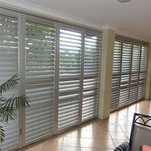

In the context of contemporary coastal development and high-density urban construction, impact windows manufacturers are no longer merely a choice of material suppliers, but have gradually become a crucial decision-making node throughout the entire process of design, construction, and asset operation. For developers, architects, and general contractors, selecting a suitable partner is not simply a matter of comparing prices or product catalogs, but a systematic judgment based on the entire project lifecycle, risk control logic, and the synergy of building systems-an approach closely tied to choosing the right impact windows manufacturers for coastal and commercial projects. Especially in multi-unit projects, coastal developments, and commercial buildings, the window system, as the most vulnerable yet most critical component of the building envelope, directly impacts the building's structural safety, energy efficiency, and long-term operational stability.
When a project is in the early conceptual design phase, architects often start with the overall facade language and window ratio, while developers focus more on the project's future market positioning and return on investment model. At this stage, the role of impact window manufacturers is often incorporated into the discussion early on, not because of the "product attributes" of the windows themselves, but because of their constraining and supporting role in the entire building facade system. Especially in high-rise or coastal projects, the use of large-area glass has become almost standard. While this design trend enhances views and lighting, it also significantly amplifies structural risks. If a window fails, the internal air pressure instantly becomes unbalanced, potentially leading to overall structural damage-a fact repeatedly demonstrated in past extreme weather events.
Therefore, in this context, when evaluating impact window manufacturers, developers often focus not on "whether the product can be made," but on "whether the system can stably support the design intent." For example, in coastal developments, buildings must withstand wind speeds exceeding 150 mph, continuous salt spray corrosion, and the combined effects of heavy rainfall. These conditions dictate that the window system must not only fulfill basic opening and lighting functions but also become a critical element in maintaining structural integrity. In other words, the capabilities of impact window manufacturers are no longer limited to manufacturing products but require participation in the definition of building performance.
As projects enter the detailed design phase, architects and façade consultants begin to break down specific technical parameters, such as design pressure, wind load, glass configuration, and frame system. During this process, the differences between various impact window manufacturers become more apparent. Not all manufacturers can provide stable solutions under high wind pressure and large opening conditions, especially in multi-unit projects where wind pressure variations across different floors and orientations directly impact window type selection and structural design. At this point, whether manufacturers possess sufficient test data and engineering experience becomes a key consideration for developers.
In actual project implementation, general contractors often raise a more practical question: are these systems controllable during construction? The gap between theoretical performance and on-site implementation is an underestimated source of risk in many projects. If impact window manufacturers only focus on product output without understanding installation systems, details, and tolerance for construction errors, performance degradation can easily occur later. In fact, the certification of impact window systems relies not only on the product itself but also on the complete installation process and on-site execution. This is why many standards (such as Miami-Dade or Florida Product Approval) emphasize "whole system testing."
Furthermore, in commercial buildings and large-scale residential projects, developers increasingly prefer to evaluate impact window manufacturers based on "lifecycle costs" rather than "initial costs." While traditional window systems may seem more price-competitive initially, in high-risk environments, their maintenance, replacement, and potential loss costs are often far higher than those of impact systems. Especially in coastal developments, window system failure not only means damage to a single component but can also trigger a chain reaction of water intrusion, structural damage, and even increased insurance costs. Therefore, developers tend to view impact windows as a "risk hedging tool" rather than a simple material upgrade.
Against this backdrop, the competitive logic among impact window manufacturers has also shifted. The competition, previously centered on product specifications, is gradually moving towards competition focused on "system capabilities." Developers and architects are increasingly focused on whether manufacturers can provide comprehensive technical support, such as participation in wind pressure calculations during the design phase, offering node optimization suggestions during construction, and providing long-term technical support during maintenance. This shift from "supplier" to "system partner" has effectively redefined the role of impact window manufacturers in projects.
Simultaneously, energy performance and comfort have also become indispensable factors. While impact windows were initially marketed primarily for their impact resistance, in modern architecture, their thermal insulation, sound insulation, and optical performance also influence project value. Especially in high-end residential and mixed-use developments, developers need to strike a balance between safety and living experience. This means that impact window manufacturers must possess more comprehensive product development capabilities beyond structural performance, such as the ability to integrate low-E glass configurations, thermal break designs, and multi-layer sealing systems.
As projects progress into the bidding and procurement phase, developers and general contractors often make decisions by comparing technical documents, test reports, and past project experience from different impact window manufacturers. It's worth noting that at this stage, "certification" becomes an important but not sufficient criterion. While certifications like AAMA and NFRC can indeed demonstrate a product's performance level, for complex multi-unit projects, these certifications are more of an "entry ticket" than the final deciding factor. What truly influences the decision is often the manufacturer's actual performance in similar projects and its ability to handle complex conditions.

In many coastal commercial projects, developers even require impact window manufacturers to participate in mock-up testing, simulating real wind pressure, rainfall, and structural deformation conditions to verify the overall system performance. This practice essentially reflects a trend: window systems are no longer seen as standardized products, but rather as critical systems requiring customized verification for specific projects. This further increases the demands on manufacturers' engineering capabilities, requiring them to possess cross-project adaptability and rapid response capabilities.
As the industry's understanding of risk deepens, developers are also paying more attention to the "safety redundancy capabilities" of impact window manufacturers when selecting them. In the context of the uncertainties brought about by climate change, simply meeting current regulatory requirements is no longer sufficient. More and more projects tend to choose systems that offer a higher safety margin to cope with potential future extreme situations. This trend is particularly evident in high-value coastal developments, as these projects typically have longer investment cycles and higher asset sensitivity.
With this complex interplay of factors, the selection of impact window manufacturers has gradually evolved from a single-dimensional product comparison to a multi-dimensional system evaluation. The collaboration among developers, architects, and general contractors also revolves around this core, forming a continuous decision-making chain that spans design, construction, and operation. Window systems are no longer passively matched components of the design, but rather important variables that actively participate in defining the boundaries of building performance and risk.
As projects transition from blueprints to actual construction, the evaluation logic of impact window manufacturers by developers and general contractors shifts. While the design phase emphasizes technological compatibility and system performance, the construction and delivery phases highlight manufacturing capabilities and supply chain stability. This is especially true in multi-unit projects or large commercial buildings, where window systems often involve thousands or even tens of thousands of units. Production schedules, delivery batches, and on-site installation coordination directly impact the overall project efficiency.
In this process, the maturity of impact window manufacturers' project management capabilities becomes a key implicit indicator for developers. Many window designs provided by architects require further breakdown and standardization in actual production to adapt to mass production logic. If manufacturers lack experience with large-scale projects, issues such as dimensional discrepancies, system inconsistencies, or delivery delays can easily arise. These problems, once they enter the construction phase, often manifest amplified on-site, affecting not only the windows themselves but also the continuity of the entire facade system.
Meanwhile, the durability requirements of coastal developments make manufacturers' capabilities in raw material selection and surface treatment processes particularly crucial. Window frames exposed to high salt spray and high humidity environments for extended periods will experience performance degradation far faster than in inland projects if there are shortcomings in aluminum processing, sealing systems, or hardware selection. This "time-based risk" may not be immediately apparent upon completion, but it directly impacts the building's operational performance over the next ten or even twenty years. Therefore, when selecting impact window manufacturers, developers often focus more on their long-term project experience in similar environments rather than single test data.
For general contractors, another undeniable practical issue is the "constructability" of the system on-site. Impact window systems are typically complex, involving multiple layers of sealing, drainage paths, and connections to the main structure. If the design is overly idealistic and lacks construction redundancy, errors can easily accumulate during actual installation. Experienced impact window manufacturers can often anticipate these problems during the design phase and reduce on-site uncertainty through node optimization or installation guidance. This capability is particularly important for large multi-unit projects, as any detail-related issue, if repeated in standard floors, can quickly escalate into a systemic risk.
In practice, developers increasingly prefer impact windows manufacturers that can provide "early involvement," meaning that the manufacturer is involved in shop drawing refinement, node confirmation, and mock-up testing before construction even begins. This collaborative approach fundamentally changes the traditional supply and demand relationship, transforming them from passive executors to proactive collaborators. Especially in complex commercial building projects, this collaboration can significantly reduce the gap between design and construction, thereby improving overall delivery efficiency.
Looking deeper, customization capabilities are increasingly becoming a key differentiator among impact window manufacturers. As architects pursue greater freedom in facade design, standardized window types often fail to fully meet design intent, especially in combinations of irregular openings, large glass panes, and diverse opening methods, requiring systems with high flexibility. However, customization does not equate to unlimited variation. For developers, the ideal state is "customization within a controllable range," satisfying design requirements without significantly increasing production complexity and costs. Therefore, whether manufacturers possess modular design thinking and the ability to find a balance between standardization and customization becomes a crucial evaluation dimension.
Against this backdrop, the depth of technical support from impact window manufacturers is beginning to be considered in long-term partnerships. For developers working on multiple projects, establishing long-term collaborations with reputable manufacturers is more effective than constantly selecting suppliers for each project. This collaboration extends beyond price and delivery to encompass the accumulation of knowledge and experience. For example, continuously optimized node designs across multiple coastal developments and data-driven experience accumulated in different wind pressure zones can translate into efficiency advantages in subsequent projects with hurricane windows.
Meanwhile, insurance and compliance factors are subtly influencing developers' choices. With increasing climate risks, insurance companies are raising their requirements for building envelope systems. The performance and certification of impact window systems directly impact project insurance costs and approval processes. In high-risk areas, choosing impact window manufacturers with mature certification systems and project experience can even be a prerequisite for successful project progress. This externally driven selection logic means that manufacturers not only need to meet technical standards but also understand the regulations and market requirements of different regions.
As projects enter the final stages of completion and delivery, the focus of the window system shifts from "construction quality" to "user experience." For residential and mixed-use developments, end-user perceptions of sound insulation, airtightness, and ease of use all contribute to the developer's brand value. Impact window manufacturers that focus solely on impact resistance while neglecting daily user experience will struggle to gain a competitive edge in the long run. Therefore, more and more manufacturers are investing more in R&D resources for hardware systems, smooth operation, and attention to detail to meet the demands of the high-end market.
It's worth noting that in some large commercial buildings, facilities management teams are beginning to intervene earlier, setting requirements for the maintenance costs and replaceability of window systems. This means that impact window manufacturers not only need to consider the efficiency of the installation phase but also the ease of future maintenance. For example, factors such as the ease of glass replacement, the ease of maintenance of seals, and the long-term supply capability of hardware, which were often overlooked in the past, are gradually becoming important components of developers' decisions in the current context of emphasizing full life-cycle management.
Under this multi-dimensional evaluation system, the competitive boundaries of impact window manufacturers are constantly expanding. From initial product performance to construction coordination, and then to supply chain management and long-term service capabilities, each link can become a key variable affecting the success or failure of a project. The collaboration between developers, architects, and general contractors is also deepening in this process, transforming the window system from a single component into a crucial interface connecting design, engineering, and operation.
As the industry gradually shifts from "meeting specifications" to "proactively managing risks," the role of impact window manufacturers is also upgrading. They are no longer just providing standard-compliant products but need to provide a verifiable, executable, and sustainable solution for buildings in uncertain environments. This shift has made the selection process more complex, but it has also provided greater room for development for manufacturers with comprehensive capabilities.
When a project reaches its delivery milestone, developers, looking back at the entire cycle, often gain a renewed understanding of the value of impact window manufacturers. What initially appears to be a choice based solely on performance parameters and cost is ultimately validated through improvements in construction pace, risk control, user experience, and even long-term asset performance. This "lagging manifestation" characteristic transforms the selection of window system vendors from a one-off procurement into a path-dependent, long-term decision.
In actual development logic, developers rarely evaluate the performance of a single project in isolation. Instead, they tend to distill experience into reference models for future projects. If an impact window manufacturer performs consistently well in a coastal development or large multi-unit projects, demonstrating smooth technical collaboration, controllable delivery pace, and a low rate of later-stage issues, the probability of them being repeatedly selected in subsequent projects increases significantly. This "project reuse" mechanism is essentially a way for the development system to reduce uncertainty. Compared to the risks of re-evaluating new vendors each time, continuing proven partnerships often aligns better with the logic of overall development efficiency and risk management.
This trend is particularly pronounced within the commercial construction sector. Given the immense scale of these projects and the complex array of stakeholders involved, instability at any stage of the process can trigger a chain reaction. Consequently, when selecting manufacturers of impact-resistant windows, general contractors and developers often place greater emphasis on a manufacturer's actual performance in similar past projects-rather than relying solely on technical documentation or product samples. In other words, project experience itself has evolved into a form of "implicit qualification"-one that, in certain instances, carries even greater persuasive weight than various formal certifications alone.
Meanwhile, the role of architects in this decision-making chain is subtly shifting. Previously, window systems were largely seen as tools for realizing design intent. Now, architects are proactively engaging impact window manufacturers with specific capabilities early in the design process to ensure the feasibility of the design later. This approach isn't a restriction on design freedom, but rather a more realistic optimization path. Especially in projects with complex facades or high-performance requirements, the boundaries between design and manufacturing are blurring, requiring both parties to reach consensus earlier to avoid the time and cost losses from repeated adjustments later.
At a deeper level, developers' judgment of impact window manufacturers also involves establishing a "trust structure." This trust doesn't come from a single dimension but is gradually accumulated through stable performance across multiple projects. For example, whether the system remains intact under extreme weather conditions, whether it can be delivered on time under tight deadlines, and whether it has the ability to respond quickly to minor issues. These specific, minute performances ultimately constitute developers' overall perception of a particular manufacturer and directly influence its priority in future projects.

Notably, in the current market environment, building such trust increasingly hinges on "transparency." Developers and general contractors are no longer content with passively receiving information; instead, they expect manufacturers of impact-resistant windows to provide clearer data support throughout the entire process-from design and production to testing. Specifically, this entails more detailed data regarding wind pressure calculations, more valuable feedback drawn from project case studies, and even quality control records generated during the manufacturing process. This trend toward greater transparency not only fosters a more candid and open collaborative relationship between the parties but also raises the bar for the manufacturers' overall capabilities.
In some high-end residential and mixed-use developments, this trend extends further to the brand level. While end-users may not directly know the specific impact window manufacturers, developers are increasingly aware that the stability of building quality translates into brand reputation over long-term use. Therefore, choosing manufacturers with stable performance and a good track record is essentially endorsing the project's market performance. This logic, extending from "engineering selection" to "brand strategy," further amplifies the significance of window systems.
As the industry continues to evolve, developers' expectations for impact window systems are also changing. From initially emphasizing impact resistance and safety performance, to later focusing on energy consumption and comfort, and now gradually prioritizing full life-cycle performance and ease of maintenance, this evolution reflects a general improvement in the building industry's understanding. In this context, impact window manufacturers that remain focused on a single performance dimension will find it difficult to meet the needs of future projects. Conversely, manufacturers that can integrate structural, safety, energy, and operational factors will find it easier to gain opportunities in complex projects.
This change is also driven by the external environment. Increased climate uncertainty, continuous upgrades to building codes, and increasingly stringent insurance systems are all raising the bar for the industry. When faced with these changes, developers need more than just products that meet current standards; they need a system capability that can adapt to future changes. Therefore, when choosing Impact Windows manufacturers, "the ability to continuously iterate" is becoming an increasingly important but difficult-to-quantify criterion.
Returning to the projects themselves, a clear trend emerges: window systems are no longer merely components of a building's exterior envelope; rather, they serve as a critical interface connecting structural integrity, energy management, and user experience. In coastal developments, high-rise commercial buildings, and complex multi-unit projects, the significance of this interface is increasingly amplified. Any deficiency in the minutest detail can, over the course of long-term use, escalate into a systemic failure; conversely, a stable and reliable system continues to deliver value consistently throughout years of operation.
Consequently, when developers embark on new projects, the selection of impact window manufacturers is rarely treated as an isolated issue; instead, it is viewed as an integral link within the broader logic of the entire development process. From system compatibility during the initial design phase to execution capabilities during construction, and finally to consistent performance during the operational phase-every dimension continuously influences the ultimate decision. It is precisely within this framework of multifaceted considerations that the role of impact window manufacturers is being redefined: no longer merely product suppliers, they are now recognized as "partners in long-term value creation."
In the context of future projects, this shift in roles is poised to deepen even further. As architectural complexity and risk levels continue to rise, the collaborative synergy among developers, architects, and general contractors will increasingly rely on partners capable of providing robust, systemic support, especially when Florida impact window requirements demand early planning in coastal projects. Within this ecosystem, impact window manufacturers are gradually stepping out of the background and into the forefront, emerging as one of the pivotal factors determining the ultimate success or failure of a project.