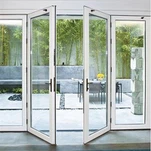

Commercial Impact Windows as a System-Level Decision in Coastal Projects
In today's coastal construction environment, façade systems are no longer treated as simple enclosure elements. They play a direct role in determining a building's safety, energy efficiency, and long-term operating costs, especially in the context of coastal risk management decisions related to impact window systems.
For developers working on multi-family housing, hotel developments, or high-rise commercial projects, the challenge is not just meeting regulatory requirements. It is finding a workable balance between compliance, cost control, and construction timelines.
Within this context, commercial hurricane windows are no longer just a product selection. They have evolved into part of a broader system decision-one that runs through design, procurement, and construction, and directly influences how risk is managed in coastal developments.
Early Planning Stage: Aligning Performance Requirements and Code Compliance
-
Defining Performance Targets Based on Project Strategy
-
Integrating Impact Windows into the Building Envelope System
-
Early Supplier Involvement and Feasibility Assessment
Design Development: Managing System Complexity in Multi-Unit Projects
-
Refining Window Configurations and System Details
-
Adapting to Orientation and Performance Variations

-
Balancing Standardization and Customization
At this stage, contractors must find a balance between standardization and customization. Too much variation increases procurement and installation complexity, while excessive standardization may fail to meet performance requirements in critical areas. This balance directly shapes the procurement strategy that follows.
Procurement Strategy: From Product Purchasing to System Partnership
-
Scaling from Orders to Long-Term Supply Relationships
-
Evaluating Suppliers Beyond Price
-
Certification and Compliance as Risk Control Factors
-
Technical Alignment Through Drawings and System Review
Procurement Execution: Managing Production Cycles and Delivery Timing
-
Understanding the Production Complexity of Impact Windows
-
Batch Procurement Based on Construction Progress
-
Coordinating Delivery with Construction Phasing
Coordination and Communication Across Project Phases
-
Why Information Flow Matters in Complex Projects
procurement as a Continuous Coordination Process
-
Beyond Purchasing: Managing Cross-Regional Complexity
In large projects, procurement is rarely a one-time transaction. It is an ongoing process of coordination and adjustment, especially in cross-regional supply scenarios such as exports from China to North America.
In these cases, factors such as shipping schedules, customs clearance, and on-site storage conditions must all be considered alongside production timelines. Any disruption in these links can affect the overall construction schedule.
As a result, many contractors now prioritize working with suppliers who have international project experience, as this significantly reduces uncertainty in both logistics and execution.
Construction Phase: From Product Delivery to System Installation
-
Installation Quality and On-Site Coordination
-
Supplier Support as a Critical Performance Factor
Process Control in Large-Scale Project Execution
-
From Early Planning to Dynamic Execution
-
Rolling Production and Delivery Strategies
Managing Uncertainty in Coastal Development Projects
-
Weather Constraints and Schedule Flexibility
Coastal construction projects often face additional uncertainties due to weather conditions, including rainy seasons and hurricane periods. These factors can significantly affect construction timelines.
While developers typically include buffer periods in overall planning, execution still depends heavily on supply chain flexibility. If one phase is delayed, the ability of suppliers to quickly adjust production and delivery schedules becomes critical to keeping the project on track.
Cost Control from a Lifecycle Perspective
-
Risks of Price-Driven Procurement
-
Evaluating Supplier Value Beyond Initial Cost
Logistics and Delivery as Key Cost Factors
-
Managing Cross-Border Supply Chains
In cross-border procurement scenarios, transportation and delivery become major cost variables. The process-from production completion to on-site installation-includes multiple stages such as sea freight, customs clearance, and inland logistics.
Each step introduces potential risks in both timing and cost, making logistics planning an essential part of procurement strategy.
-
Aligning Logistics with Project Execution
In time-sensitive projects, decisions such as pre-stocking inventory or using expedited shipping at critical stages can directly impact both cash flow and construction efficiency.
This is particularly relevant when sourcing hurricane impact windows for coastal projects, where both performance requirements and delivery timing are critical.
Final Stage: Performance Verification and Project Delivery
-
From Installation to Performance Validation
As projects approach completion, impact windows shift from construction components to performance-critical systems.
Final acceptance focuses not only on visual quality but also on real-world performance indicators such as airtightness, watertightness, and impact resistance. These are often verified through on-site testing or third-party inspections.
-
Documentation and Compliance Support
At this stage, the supplier's ability to provide complete documentation and technical support becomes essential. Proper certification records and testing reports are often required for final approvals and project handover.
Long-Term Strategy: Supplier Evaluation and Industry Shift
-
From One-Time Selection to Ongoing Evaluation
Supplier evaluation does not end with a single project. Performance is continuously assessed throughout the project lifecycle and across future developments.
A supplier that performs well initially may still be replaced if issues arise later, while those demonstrating consistent reliability are more likely to become long-term partners.

-
From Product-Based Thinking to System Integration
Overall, the role of Commercial Hurricane Windows reflects a broader industry shift-from product-focused procurement to system-level integration.
For developers, architects, and contractors, success increasingly depends on how well design, supply chain, and construction processes are aligned.
This shift is not just operational-it represents a fundamental change in how complex projects are planned and executed.
Building Replicable Supply Chains in Coastal Development
Stability Over Price: The Contractor's Perspective
The Evolving Role of Suppliers in Design Collaboration
At the same time, the role of suppliers within project systems is changing. As more developments shift toward performance-driven design, façade systems are no longer selected at the final stage, but are integrated into the project from the conceptual phase.
In this context, suppliers who can provide early-stage technical input-such as system recommendations based on climate conditions or support in optimizing structural details-are no longer seen as simple vendors. They become part of the technical decision-making process.
This transition from "supplier" to "technology partner" not only improves system performance but also strengthens collaboration across the project team. It allows potential issues to be identified earlier and reduces the need for adjustments during later stages.
Supplier Evaluation as a Continuous Process
With experience accumulated across multiple projects, developers typically establish internal frameworks for evaluating and managing suppliers. These frameworks go beyond basic pricing comparisons and instead focus on multiple performance dimensions, including product quality, delivery consistency, communication efficiency, and after-sales support.
For impact windows, this evaluation process is often even more rigorous, given their direct relationship to building safety and regulatory compliance. A supplier that performs inconsistently-even if only in a single phase-may be excluded from future projects. Conversely, those that demonstrate stable and reliable performance over time are more likely to become part of a long-term cooperation network.
This continuous evaluation mechanism ensures that supply chain quality improves over time rather than remaining static.
Industry Shift: From Price Competition to Capability Competition
This shift in how developers and contractors evaluate suppliers is also driving broader changes across the industry. The traditional model of competing primarily on price is gradually losing relevance, particularly in complex coastal and commercial projects.
Instead, competition is increasingly based on comprehensive capability. Manufacturers are expected not only to deliver products, but also to demonstrate stable production capacity, a clear understanding of regional regulations, and the ability to support projects throughout their lifecycle.
This trend is particularly evident in markets such as North America, where strict requirements exist at every stage-from design approval to final inspection. Suppliers that cannot meet these expectations consistently find it difficult to remain competitive, regardless of pricing.
Impact Windows as a Core Element of Project Value
Looking at the full project lifecycle, impact windows are not simply a construction component. They are deeply embedded in the building's safety system and play a key role in how developers realize long-term project value.
This is especially true in large-scale coastal developments and complex commercial buildings, where small deviations in early stages can be amplified later. Issues in design coordination, procurement planning, or installation quality can all have cascading effects on cost, schedule, and performance.
As a result, the responsibility of contractors extends far beyond completing procurement tasks. It involves continuously balancing performance requirements, supply chain stability, and construction efficiency within a complex and evolving project environment.
From One-Off Execution to Standardized Project Management
As industry experience continues to accumulate, more projects are moving away from one-off execution models toward standardized management approaches.
This means that decisions related to impact windows-selection, procurement, and installation-are increasingly based on established systems rather than individual project improvisation. Lessons learned from previous developments are incorporated into future projects, creating a more structured and predictable workflow.
Within this trend, suppliers who are able to integrate into these systems-and consistently perform within them-are far more likely to secure long-term roles in future developments.
Conclusion: System Integration as the Key to Long-Term Success
Ultimately, the procurement and coordination of commercial impact windows is not a standalone task. It is a critical link that connects design, supply chain, and construction management into a unified system.
For developers, architects, and general contractors, the real value lies not in completing a single successful procurement, but in continuously refining this system to make it more efficient, stable, and predictable over time.
As this capability matures, project risks are reduced, execution becomes more controlled, and the long-term performance of buildings becomes more reliable, reflecting how strategic project decisions are made in coastal impact window planning for large-scale developments. In high-risk coastal regions, this is also directly reflected in how well projects meet regulatory expectations, including compliance with Florida impact window requirements, and maintain value… in challenging environmental conditions.